Dutasteride (Avodart)
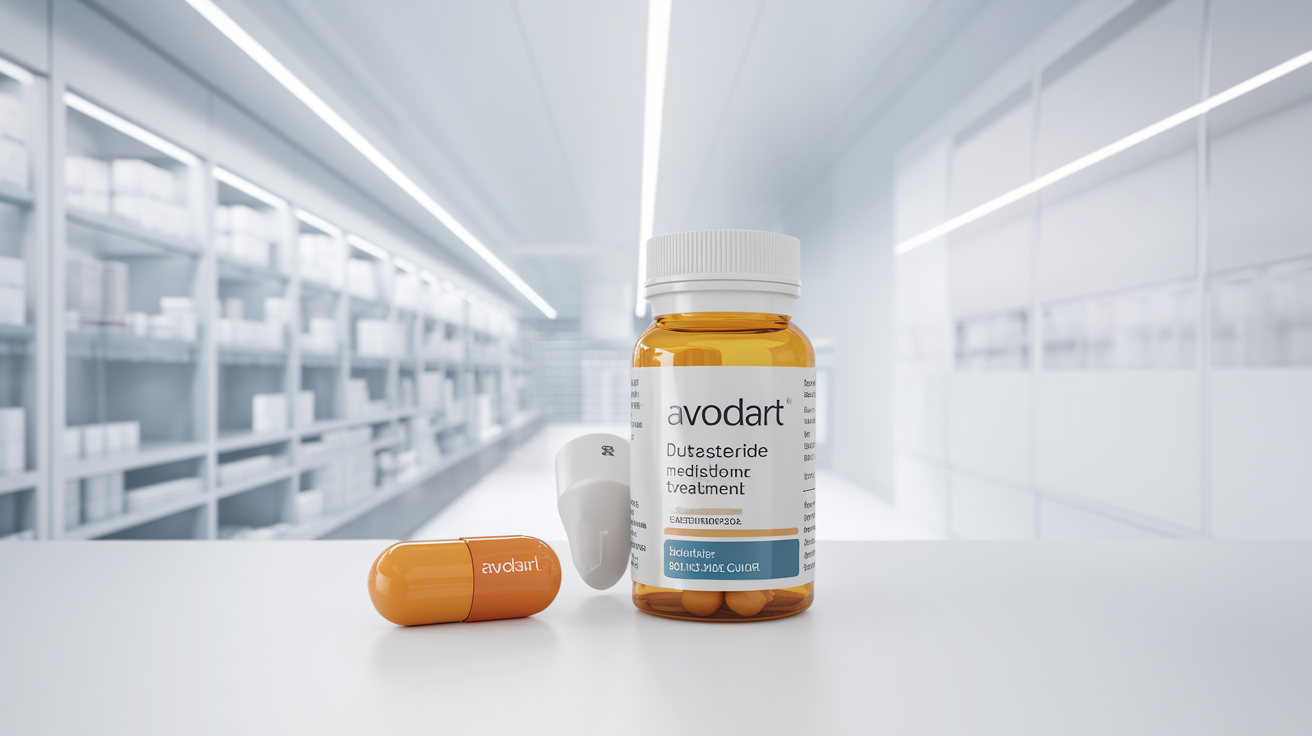
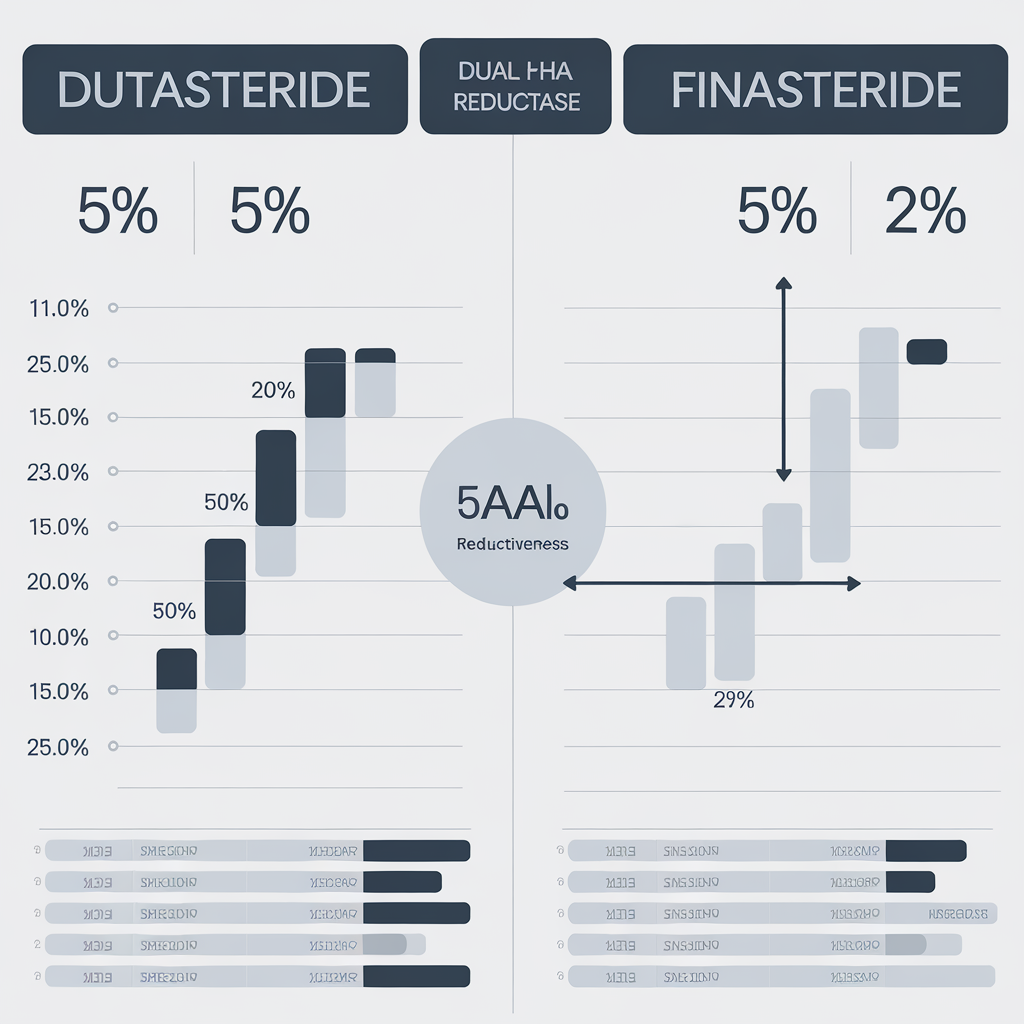
Dutasteride is a potent dual 5-alpha reductase inhibitor that blocks both type I and type II isoforms of the enzyme responsible for converting testosterone to DHT. By inhibiting both enzyme types, dutasteride achieves a more complete suppression of DHT — reducing serum levels by approximately 98% compared to finasteride's 71%.
While FDA-approved only for benign prostatic hyperplasia (BPH) under the brand name Avodart, dutasteride has gained significant off-label use for androgenetic alopecia and is officially approved for hair loss treatment in South Korea, Japan, and Taiwan. Multiple comparative studies have demonstrated its superiority over finasteride in improving hair count and density.
Dutasteride's longer half-life of approximately 5 weeks (compared to finasteride's 6-8 hours) means it remains active in the body for extended periods, which has both advantages (less sensitivity to missed doses) and disadvantages (longer time to clear the system if side effects occur). It represents the most powerful oral DHT inhibitor currently available for hair loss.

Dr. Igor I. Bussel, MD
Board-Certified Ophthalmologist, Medical Reviewer
Dr. Igor I. Bussel is a board-certified ophthalmologist and fellowship-trained surgeon affiliated with the University of California, Irvine (UCI), the Gavin Herbert Eye Institute, and the UCI School of Medicine.
Last Updated: February 2026
⚙ Mechanism of Action
Dutasteride inhibits both type 1 and type 2 5-alpha reductase enzymes, resulting in a more complete DHT reduction (98%) compared to finasteride (71%)
📖 In-Depth Overview
Dutasteride was developed by GlaxoSmithKline and approved by the FDA in 2001 for the treatment of symptomatic BPH. It was specifically engineered to inhibit both type I and type II 5-alpha reductase isoenzymes, whereas finasteride only targets type II. Type I is predominantly found in sebaceous glands and skin, while type II is concentrated in hair follicles and the prostate — meaning dutasteride provides a more comprehensive DHT blockade across all tissue types.
The clinical rationale for using dutasteride over finasteride in hair loss is straightforward: more complete DHT suppression should theoretically produce better results. And indeed, head-to-head clinical trials have largely confirmed this. A landmark 2006 study by Olsen et al. comparing dutasteride 0.5mg to finasteride 1mg found that dutasteride produced significantly greater increases in hair count at 12 and 24 weeks.
Despite its superior efficacy, dutasteride remains off-label for hair loss in the US and Europe, largely due to GlaxoSmithKline's decision not to pursue FDA approval for this indication. This means insurance coverage is limited and prescribing requires physician discretion. However, it is increasingly prescribed by hair loss specialists, particularly for patients who have had insufficient response to finasteride.
Dutasteride is best suited for men with moderate to advanced androgenetic alopecia, especially those who have tried finasteride without adequate results. Its more complete DHT suppression makes it a logical escalation for non-responders. Some physicians also use it as a first-line treatment in aggressive cases. Due to its long half-life, some doctors prescribe it on alternate days or twice weekly rather than daily, potentially reducing side effects while maintaining efficacy.
📊 Effectiveness Data
🔬 Clinical Studies
Olsen et al. - Dutasteride vs Finasteride Phase II Trial
2006Dutasteride 0.5mg produced significantly greater increases in hair count than finasteride 1mg at 12 and 24 weeks. All dutasteride doses (0.02mg, 0.1mg, 0.5mg, 2.5mg) were superior to placebo.
Jung et al. - Dutasteride 0.5mg in Korean Men
2014After 6 months, dutasteride showed significant improvement in hair width and density compared to baseline. Global photographic assessment showed improvement in 77.8% of subjects.
Shanshanwal et al. - Dutasteride vs Finasteride Comparative Study
2017Dutasteride demonstrated superior hair regrowth and patient satisfaction compared to finasteride over 24 weeks, with similar adverse event profiles between the two drugs.
✓ Who Is It For
Dutasteride is ideal for men with moderate to advanced androgenetic alopecia who have not achieved satisfactory results with finasteride. It's particularly suited for men with aggressive hair loss patterns, diffuse thinning, or those with both vertex and frontal involvement. It can also be considered as a first-line treatment for men who want the most potent DHT reduction available. Approved for hair loss in South Korea, Japan, and Taiwan, making it easier to obtain in those markets.
✗ Who Should Avoid
The same contraindications as finasteride apply with added emphasis: women of childbearing age must absolutely avoid dutasteride, and should not even handle broken capsules. Due to its 5-week half-life, men planning to conceive should stop dutasteride at least 6 months before trying. Patients with liver disease should avoid it, as hepatic metabolism is the primary clearance pathway. Those sensitive to finasteride's side effects should approach dutasteride cautiously, as the more complete DHT suppression may intensify similar effects.
💰 Cost Breakdown
⚖ How It Compares
Dutasteride is the most powerful oral DHT inhibitor available. It reduces DHT by 98% vs. finasteride's 71%, and clinical trials consistently show superior hair count improvements. However, the magnitude of clinical difference is modest — dutasteride is roughly 10-15% more effective than finasteride, not dramatically different. Compared to minoxidil, dutasteride addresses the root hormonal cause of hair loss rather than simply stimulating growth. The optimal approach for advanced cases combines dutasteride with minoxidil and potentially microneedling for maximum effect.
💡 Expert Tips from Dermatologists
If switching from finasteride, you can transition directly to dutasteride 0.5mg without a washout period.
Consider twice-weekly dosing (e.g., Monday and Thursday) rather than daily — dutasteride's long half-life means it remains effective even with less frequent dosing, potentially reducing side effects.
Don't donate blood while taking dutasteride or for 6 months after stopping, due to risk to pregnant women who might receive the blood.
Dutasteride soft gel capsules should be swallowed whole — do not chew or open them, as the contents can irritate oral mucosa.
If you're a finasteride non-responder, give dutasteride at least 6-12 months before judging its effectiveness.
Monitor for breast tissue changes and report any tenderness or enlargement to your doctor promptly.