Exosome Therapy
Exosome therapy is an emerging regenerative medicine approach that uses extracellular vesicles derived from stem cells to stimulate hair follicle regeneration and growth. These nano-sized particles (30-150nm in diameter) contain a cargo of growth factors, cytokines, messenger RNA (mRNA), and microRNA (miRNA) that communicate regenerative signals to recipient cells in the scalp.
Exosome therapy has generated significant interest in the hair restoration community due to early studies suggesting it may be more effective than PRP for stimulating hair growth, with fewer treatment sessions required. The exosomes are typically derived from mesenchymal stem cells (MSCs), most commonly sourced from bone marrow, adipose tissue, or umbilical cord tissue.
However, it's critical to note that NO exosome products are currently FDA-approved for hair loss or any cosmetic indication. The American Hair Loss Association and the FDA have issued warnings about the marketing of unregulated exosome products. While the scientific basis is promising, patients should approach exosome therapy with informed caution and seek treatment only from reputable medical providers who are transparent about the investigational nature of the treatment.

Dr. Igor I. Bussel, MD
Board-Certified Ophthalmologist, Medical Reviewer
Dr. Igor I. Bussel is a board-certified ophthalmologist and fellowship-trained surgeon affiliated with the University of California, Irvine (UCI), the Gavin Herbert Eye Institute, and the UCI School of Medicine.
Last Updated: February 2026
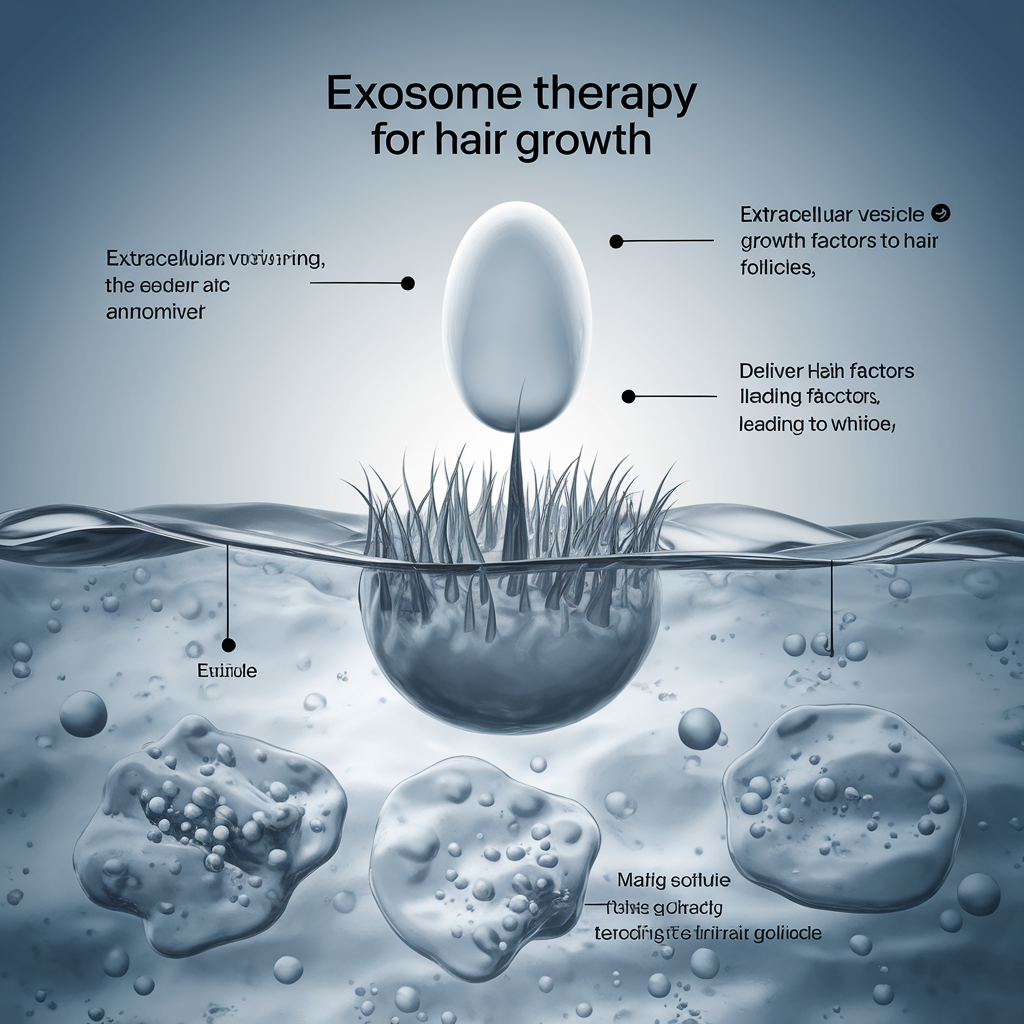
⚙ Mechanism of Action
Exosomes contain growth factors, proteins, and RNA that stimulate hair follicle stem cells and promote hair growth
📖 In-Depth Overview
Exosomes are a subset of extracellular vesicles (EVs) that are naturally released by virtually all cell types as a means of intercellular communication. They were first described in 1983 by researchers studying reticulocyte maturation, but their role as signaling vehicles was not fully appreciated until the 2000s. The application to hair loss is even more recent, with significant research only emerging in the late 2010s.
The therapeutic hypothesis is elegant: stem cell-derived exosomes contain the same regenerative signals that stem cells themselves produce, but in a cell-free format that is easier to standardize, store, and deliver. When injected into the scalp, exosomes are taken up by dermal papilla cells and follicular stem cells, where they modulate gene expression to promote hair cycle re-entry, angiogenesis, and anti-inflammatory responses.
Key growth factors carried by MSC-derived exosomes include VEGF (promotes blood vessel formation), PDGF (stimulates cell proliferation), Wnt proteins (activate hair follicle stem cells), and various anti-inflammatory cytokines. The miRNA cargo is particularly interesting, as these small RNA molecules can directly regulate gene expression pathways involved in hair follicle cycling.
Despite the promising science, the current clinical landscape for exosome therapy is problematic. Most studies are small, non-randomized, and short-term. The source and preparation of exosomes vary widely between clinics, making it impossible to compare results across providers. Some clinics use FDA-registered (but not approved) products, while others use unregulated preparations. The FDA has sent warning letters to several companies marketing exosome products for unapproved uses.
Patients considering exosome therapy should ask providers specific questions: What is the source of the exosomes? What is the concentration? Is there published clinical data on the specific product being used? Are there any FDA registrations or approvals? Legitimate providers will be transparent about the investigational nature of the treatment.
📊 Effectiveness Data
🔬 Clinical Studies
Kwack et al. - Exosomes from Dermal Papilla Cells
2019Exosomes derived from dermal papilla cells stimulated outer root sheath cell proliferation and increased expression of hair growth-related genes (Bcl-2, cyclin D1) in vitro. Migration of hair follicle cells increased by 30-40%.
Rajendran et al. - MSC Exosomes for Hair Growth Review
2022Systematic review concluded that MSC-derived exosomes show the most promising results among regenerative therapies for hair growth, followed by PRP. Exosomes promoted dermal papilla cell proliferation and extended anagen phase in preclinical models.
Oh et al. - Adipose-Derived Exosome Clinical Pilot
2023In a small pilot study, patients receiving scalp injections of adipose-derived stem cell exosomes showed 29% increase in hair density and 18% increase in hair thickness at 12 weeks compared to baseline. No serious adverse events reported.
✓ Who Is It For
Exosome therapy may be considered by patients who have tried conventional treatments without adequate results and are open to emerging, investigational therapies. It's potentially suited for those seeking a regenerative approach with fewer sessions than PRP, patients looking for alternatives to hormonal medications, and those willing to accept the uncertainty of a not-yet-proven treatment. Ideal candidates have mild to moderate hair thinning with some remaining active follicles.
✗ Who Should Avoid
Patients with a low tolerance for medical uncertainty should avoid exosome therapy until more robust clinical evidence is available. Anyone with autoimmune conditions, active cancers, or compromised immune function should avoid it due to unknown long-term effects of intercellular signaling modulation. Pregnant or breastfeeding women should not undergo treatment. Patients seeking FDA-approved options should focus on proven treatments instead. Those on a budget should note that exosome therapy is expensive ($1,500-$4,000/session) with limited evidence of efficacy.
💰 Cost Breakdown
⚖ How It Compares
Compared to PRP, exosome therapy offers a potentially more concentrated and consistent dose of growth factors (since exosomes can be standardized, unlike PRP which varies with patient health). However, PRP has a much larger evidence base and is autologous (no foreign material). Compared to proven treatments like finasteride and minoxidil, exosome therapy lacks the decades of clinical data supporting their efficacy and safety. As a standalone treatment, exosome therapy should currently be considered experimental. Its potential may be greatest as a complement to established treatments.
💡 Expert Tips from Dermatologists
Only pursue exosome therapy through licensed medical providers who are transparent about the investigational nature of the treatment.
Ask specifically about the exosome source, preparation method, and concentration — legitimate providers will have detailed product information.
Be wary of clinics making bold claims about 'guaranteed results' or 'FDA-approved exosome treatments' — no exosome products are FDA-approved for hair loss.
Continue proven treatments (minoxidil, finasteride) alongside exosome therapy — don't replace what works with something unproven.
Document your baseline with photos and hair density measurements so you can objectively assess results.
Consider waiting for larger, randomized clinical trials before investing in exosome therapy, unless you've exhausted all proven options.