Ketoconazole (Nizoral)
Ketoconazole is a broad-spectrum antifungal medication that, when formulated as a shampoo, has demonstrated potential ancillary benefits for androgenetic alopecia. Available in 1% (over-the-counter) and 2% (prescription) concentrations, ketoconazole shampoo serves double duty: treating dandruff and seborrheic dermatitis while potentially supporting hair growth through anti-androgenic and anti-inflammatory mechanisms.
While ketoconazole is not FDA-approved for hair loss and its evidence base is more modest than finasteride or minoxidil, it has earned a place in many dermatologists' recommended regimens as an inexpensive, low-risk adjunctive therapy. Its ability to reduce scalp inflammation and sebum — both of which can contribute to follicular miniaturization — makes it a logical complement to proven hair loss medications.
Ketoconazole shampoo is typically used 2-3 times per week, left on the scalp for 3-5 minutes before rinsing. It's one of the simplest treatments to incorporate into a hair loss regimen, as it replaces regular shampoo rather than adding an additional step.

Dr. Igor I. Bussel, MD
Board-Certified Ophthalmologist, Medical Reviewer
Dr. Igor I. Bussel is a board-certified ophthalmologist and fellowship-trained surgeon affiliated with the University of California, Irvine (UCI), the Gavin Herbert Eye Institute, and the UCI School of Medicine.
Last Updated: February 2026
⚙ Mechanism of Action
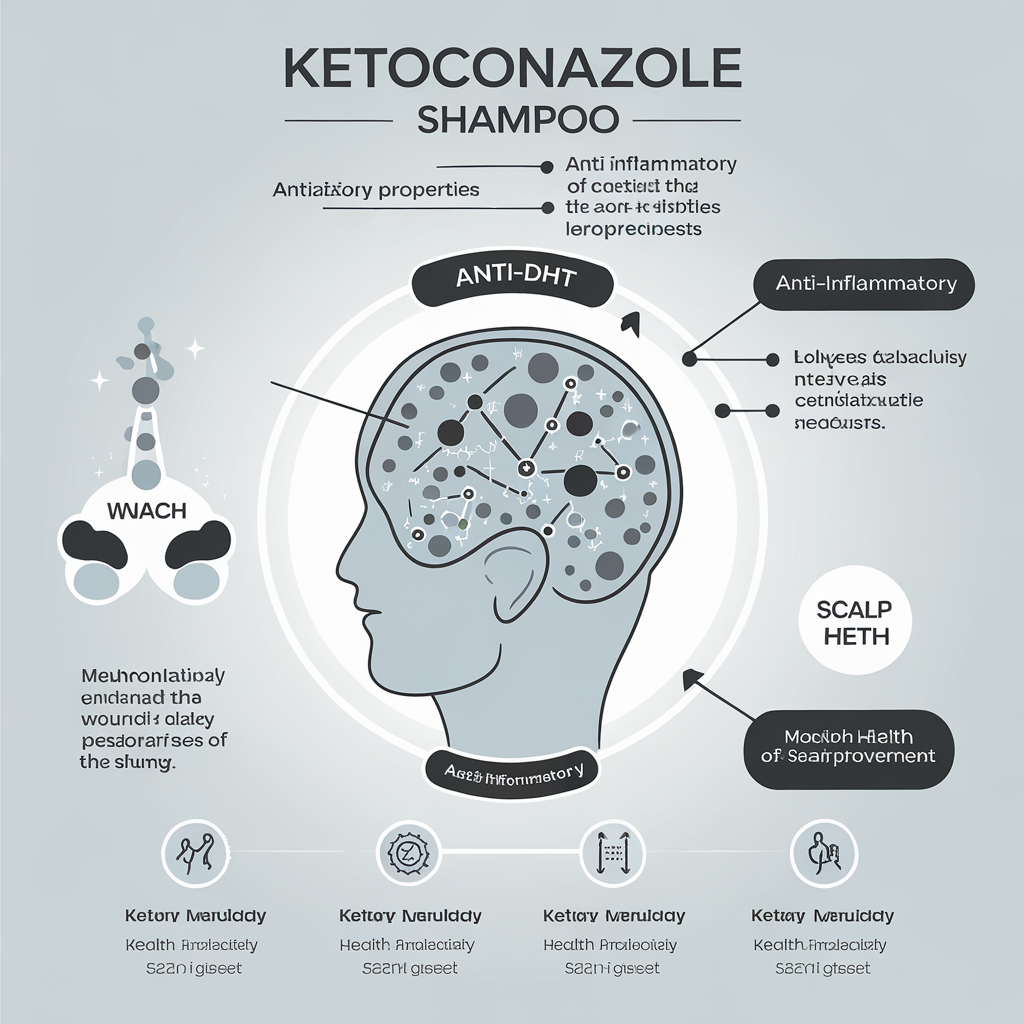
Ketoconazole may reduce scalp sebum production, inhibit DHT production, and reduce inflammation. Originally developed as antifungal but shows potential benefits for androgenetic alopecia.
📖 In-Depth Overview
Ketoconazole was originally developed by Janssen Pharmaceutica and approved by the FDA in 1981 as an oral antifungal. The topical shampoo formulation (Nizoral) was developed specifically for treating dandruff and seborrheic dermatitis caused by the fungus Malassezia. The connection to hair loss came when researchers noticed that ketoconazole appeared to have anti-androgenic properties in addition to its antifungal action.
In vitro studies have shown that ketoconazole can inhibit the binding of DHT to androgen receptors and may interfere with androgen synthesis. A key 1998 study by Pierard-Franchimont et al. found that 2% ketoconazole shampoo produced improvements in hair density and follicle size comparable to 2% minoxidil — a finding that, while not replicated at the same magnitude in later studies, established ketoconazole as a potential hair loss treatment worth investigating.
The anti-inflammatory properties of ketoconazole may be equally important for its hair benefits. Scalp inflammation plays an increasingly recognized role in the progression of androgenetic alopecia, with perifollicular inflammation (micro-inflammation around hair follicles) contributing to follicular miniaturization. By reducing this inflammation — along with addressing any underlying fungal overgrowth — ketoconazole may help create a healthier environment for hair growth.
Ketoconazole is best used as part of the 'Big Three' hair loss protocol (finasteride + minoxidil + ketoconazole shampoo), where it serves as a low-cost, low-risk third pillar. While it's unlikely to produce dramatic results on its own, its ease of use and complementary mechanism of action make it a sensible addition to any comprehensive hair loss treatment plan.
📊 Effectiveness Data
🔬 Clinical Studies
Pierard-Franchimont et al. - Ketoconazole vs Minoxidil
19982% ketoconazole shampoo used for 6 months produced improvements in hair density and size of anagen follicles comparable to 2% minoxidil. Both treatments significantly increased the proportion of anagen hairs.
Inui & Itami - Ketoconazole Anti-Androgenic Study
2007Ketoconazole demonstrated dose-dependent inhibition of DHT binding to androgen receptors in vitro. The 2% shampoo formulation showed greater anti-androgenic effect than the 1% formulation.
Marks et al. - Long-Term Safety of Ketoconazole 2% Shampoo
2013Long-term use of ketoconazole 2% shampoo showed a good safety profile with scalp irritation as the most common side effect (occurring in less than 5% of patients). No systemic absorption or hepatotoxicity detected.
✓ Who Is It For
Ketoconazole shampoo is ideal for virtually anyone experiencing pattern hair loss who wants an easy, low-risk addition to their treatment regimen. It's especially beneficial for patients who also suffer from dandruff, seborrheic dermatitis, or an oily/itchy scalp. It's a perfect third component in the 'Big Three' protocol alongside finasteride and minoxidil. Women who cannot take finasteride may particularly benefit from adding ketoconazole to their minoxidil regimen.
✗ Who Should Avoid
Those with known hypersensitivity to ketoconazole or any inactive ingredients in the shampoo should avoid it. Patients with very dry scalp may find ketoconazole exacerbates dryness — using a good conditioner on the lengths of hair (not scalp) after treatment can help. People allergic to sulfites should check formulations. Note that ketoconazole shampoo is distinct from oral ketoconazole, which carries serious hepatotoxicity risks — the topical shampoo has minimal systemic absorption and is generally very safe.
💰 Cost Breakdown
✓ Advantages
- • Topical application; no systemic effects
- • Generally well-tolerated
- • Inexpensive
- • Can be used long-term
- • Also treats dandruff and seborrheic dermatitis
✗ Disadvantages
- • Modest effectiveness for hair loss
- • Requires consistent use
- • Not FDA approved for hair loss
- • Results take 3-6 months
⚠ Side Effects
⚖ How It Compares
Ketoconazole is not a primary hair loss treatment and shouldn't be compared directly to finasteride or minoxidil in terms of efficacy. Rather, it's a complementary therapy that adds incremental benefit. Compared to other medicated shampoos (pyrithione zinc, selenium sulfide), ketoconazole has the strongest evidence for potential anti-androgenic effects. As a standalone treatment, it produces modest results at best — its true value is as part of a combination protocol. At $10-$30/month, it's one of the least expensive additions to any hair loss treatment plan.
💡 Expert Tips from Dermatologists
Leave ketoconazole shampoo on the scalp for a full 5 minutes before rinsing — most people rinse too quickly for optimal absorption.
Use ketoconazole shampoo 2-3 times per week, not daily — overuse can dry the scalp and strip natural oils.
Apply only to the scalp, not the lengths of your hair. Use regular conditioner on the mid-lengths and ends to prevent dryness.
The 2% prescription version is more effective than the 1% OTC version — ask your dermatologist for a prescription if available.
Time your ketoconazole wash days to fall between minoxidil applications — shampoo thoroughly to ensure you're applying minoxidil to a clean scalp.
Don't expect miracles from ketoconazole alone — think of it as insurance rather than a primary treatment.
🔗 Combination Protocols
Often used as adjunctive therapy with minoxidil and/or finasteride