Minoxidil (Rogaine)
Minoxidil is one of only two FDA-approved medications for treating androgenetic alopecia (pattern hair loss) and has been a cornerstone of hair loss treatment since the late 1980s. Originally developed as an oral medication for severe hypertension, minoxidil's hair-growth properties were discovered as a serendipitous side effect, leading to the development of topical formulations specifically for hair restoration.
Available in both topical (2% and 5% solutions and foams) and off-label oral formulations, minoxidil works by widening blood vessels in the scalp, increasing nutrient delivery to hair follicles, and potentially extending the anagen (growth) phase of the hair cycle. It is one of the most accessible and widely studied treatments for both male and female pattern hair loss.
Minoxidil is available over the counter in most countries, making it a popular first-line treatment. While it does not address the hormonal root cause of androgenetic alopecia like finasteride or dutasteride, it remains an essential component of most combination therapy protocols for maximizing hair density and slowing further loss.

Dr. Igor I. Bussel, MD
Board-Certified Ophthalmologist, Medical Reviewer
Dr. Igor I. Bussel is a board-certified ophthalmologist and fellowship-trained surgeon affiliated with the University of California, Irvine (UCI), the Gavin Herbert Eye Institute, and the UCI School of Medicine.
Last Updated: February 2026
⚙ Mechanism of Action
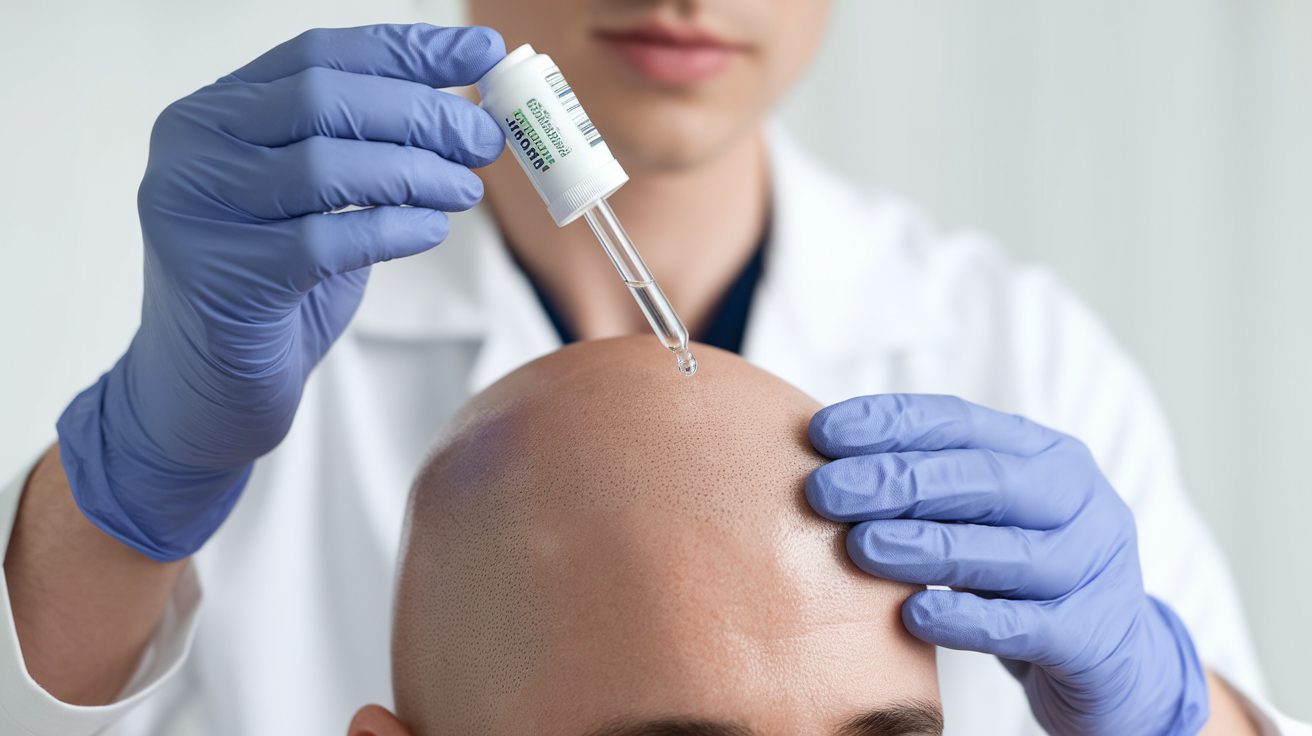
Minoxidil is a potassium channel opener that increases blood flow to hair follicles and may prolong the anagen (growth) phase of the hair cycle. It may also stimulate growth factors and increase vascular endothelial growth factor (VEGF) production.
📖 In-Depth Overview
Minoxidil was first synthesized in the late 1950s and approved by the FDA in 1979 as Loniten for treating severe, refractory hypertension. During clinical trials for hypertension, researchers noticed an unexpected side effect: patients were growing hair in unusual places — a condition called hypertrichosis. This observation sparked interest in developing a topical formulation for hair loss.
The Upjohn Company (later Pfizer) developed the topical solution, and in 1988, the FDA approved 2% topical minoxidil (Rogaine) for male pattern hair loss, making it the first drug approved for this indication. The stronger 5% formulation was approved in 1997 for men, and the 5% foam was later approved for women as well.
Minoxidil's exact mechanism for stimulating hair growth remains partially understood. Beyond its vasodilatory effects, research suggests it opens potassium channels in cells, increases production of vascular endothelial growth factor (VEGF), and may stimulate prostaglandin synthesis. These actions collectively promote hair follicle survival and growth. The drug appears to shorten the telogen (resting) phase and prolong the anagen (growth) phase, resulting in longer, thicker hairs.
Minoxidil is best suited for individuals with early to moderate androgenetic alopecia, particularly those with thinning at the crown or vertex area. It tends to be most effective in patients under 40 who have been experiencing hair loss for less than 5 years. Both men and women can benefit, though the 2% formulation is specifically approved for women. Response rates vary, but approximately 40-60% of users see meaningful improvement in hair density with consistent use over 6-12 months.
🔬 Clinical Studies
Olsen et al. - 5% vs 2% Topical Minoxidil RCT
20025% minoxidil produced 45% more hair regrowth than 2% solution at 48 weeks. Response occurred earlier with 5% formulation. Both concentrations superior to placebo.
Blume-Peytavi et al. - One-Year Observational Study (Germany)
2004After 12 months of 5% minoxidil use, physicians rated 61.8% of patients as showing improvement. Patient satisfaction rated as very good (26.4%) or good (62.2%).
Suchonwanit et al. - Oral Minoxidil Meta-Analysis
2019Low-dose oral minoxidil (0.25-5mg daily) showed significant improvement in hair density for androgenetic alopecia with manageable side effects. Hypertrichosis was the most common adverse event.
✓ Who Is It For
Minoxidil is ideal for men and women experiencing early to moderate androgenetic alopecia (Norwood stages 2-5 for men, Ludwig stages I-II for women), particularly those with thinning at the crown or vertex. It's best for patients under 40 with less than 5 years of hair loss who are looking for an accessible, over-the-counter first-line treatment. It's also suitable for those who want to avoid systemic hormonal medications or cannot take finasteride/dutasteride.
✗ Who Should Avoid
Patients with known hypersensitivity to minoxidil or propylene glycol (used in liquid formulations) should avoid topical minoxidil. Those with cardiovascular conditions, low blood pressure, or heart disease should consult their physician before use — especially with oral minoxidil. Pregnant or breastfeeding women should not use minoxidil. Patients with scalp conditions like psoriasis or severe dermatitis should address those issues before starting topical treatment. Those seeking a permanent solution should understand that benefits reverse within 3-6 months of discontinuation.
💰 Cost Breakdown
⚠ Side Effects
⚖ How It Compares
Compared to finasteride, minoxidil works through a different mechanism (vasodilation vs. DHT reduction) and doesn't carry the risk of sexual side effects, but it requires twice-daily topical application rather than a simple daily pill. Finasteride generally shows superior results for frontal hair loss, while minoxidil excels at the crown. Compared to LLLT, minoxidil has stronger clinical evidence and typically produces more noticeable results. Compared to PRP, minoxidil is far less expensive but requires daily commitment. The best results are often achieved by combining minoxidil with finasteride or dutasteride, as they address different pathways of hair loss.
💡 Expert Tips from Dermatologists
Apply minoxidil to a completely dry scalp for optimal absorption — wet hair dilutes the solution and reduces effectiveness.
Use the foam formulation if you experience scalp irritation from the liquid, as foam doesn't contain propylene glycol.
Don't wash your hair for at least 4 hours after application to allow full absorption.
Expect initial shedding ('dread shed') in the first 2-8 weeks — this is actually a positive sign that the treatment is working by pushing telogen hairs out to make way for new growth.
Consistency is more important than precision — missing occasional applications is fine, but stopping for weeks will reverse gains.
Consider switching to low-dose oral minoxidil (with doctor supervision) if topical causes scalp irritation or if compliance is difficult.
⏱ Timeline to Results
Minimum 4-6 months of consistent use; peak results at 12 months
🔗 Combination Protocols
Often combined with finasteride or dutasteride for synergistic effect