Hair Cloning / Multiplication
Hair cloning (also called hair multiplication or follicle neogenesis) is a theoretical future technology that aims to create new hair follicles by extracting a small number of follicular cells, multiplying them in a laboratory, and implanting the cultured cells back into the scalp to generate new, permanent hair growth. If perfected, this technology would eliminate the primary limitation of hair transplant surgery: the finite number of donor follicles available.
Despite decades of research, hair cloning remains firmly in the experimental stage and is NOT available for routine clinical use. The fundamental challenge lies in maintaining the hair-inductive properties of dermal papilla cells during laboratory expansion — cells that readily lose their ability to induce new hair follicles when cultured outside the body.
Several companies and research groups worldwide continue to pursue this goal, and limited clinical results have been published. However, commercial availability is estimated to be 10-15+ years away, and there is no guarantee that the remaining technical hurdles will be overcome. Patients should view hair cloning as a promising future possibility rather than a current treatment option.
Dr. Igor I. Bussel, MD
Board-Certified Ophthalmologist, Medical Reviewer
Dr. Igor I. Bussel is a board-certified ophthalmologist and fellowship-trained surgeon affiliated with the University of California, Irvine (UCI), the Gavin Herbert Eye Institute, and the UCI School of Medicine.
Last Updated: February 2026
⚙ Mechanism of Action
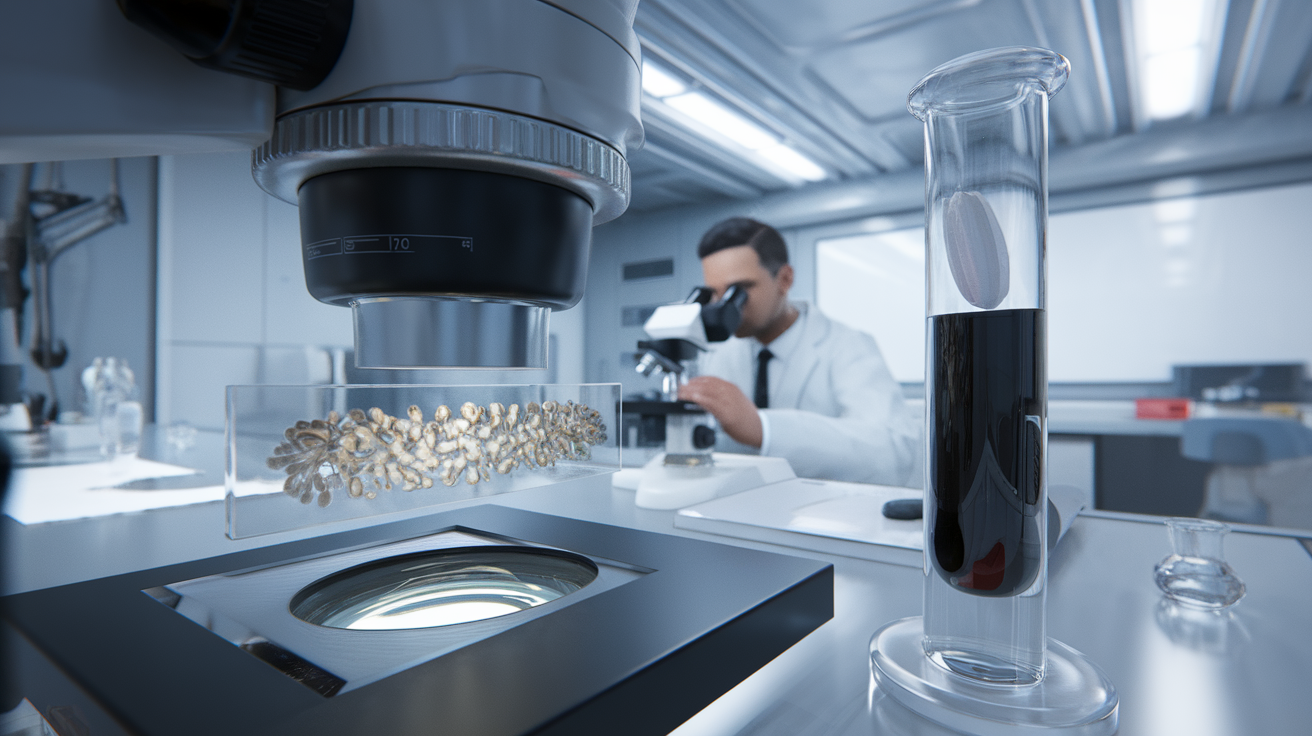
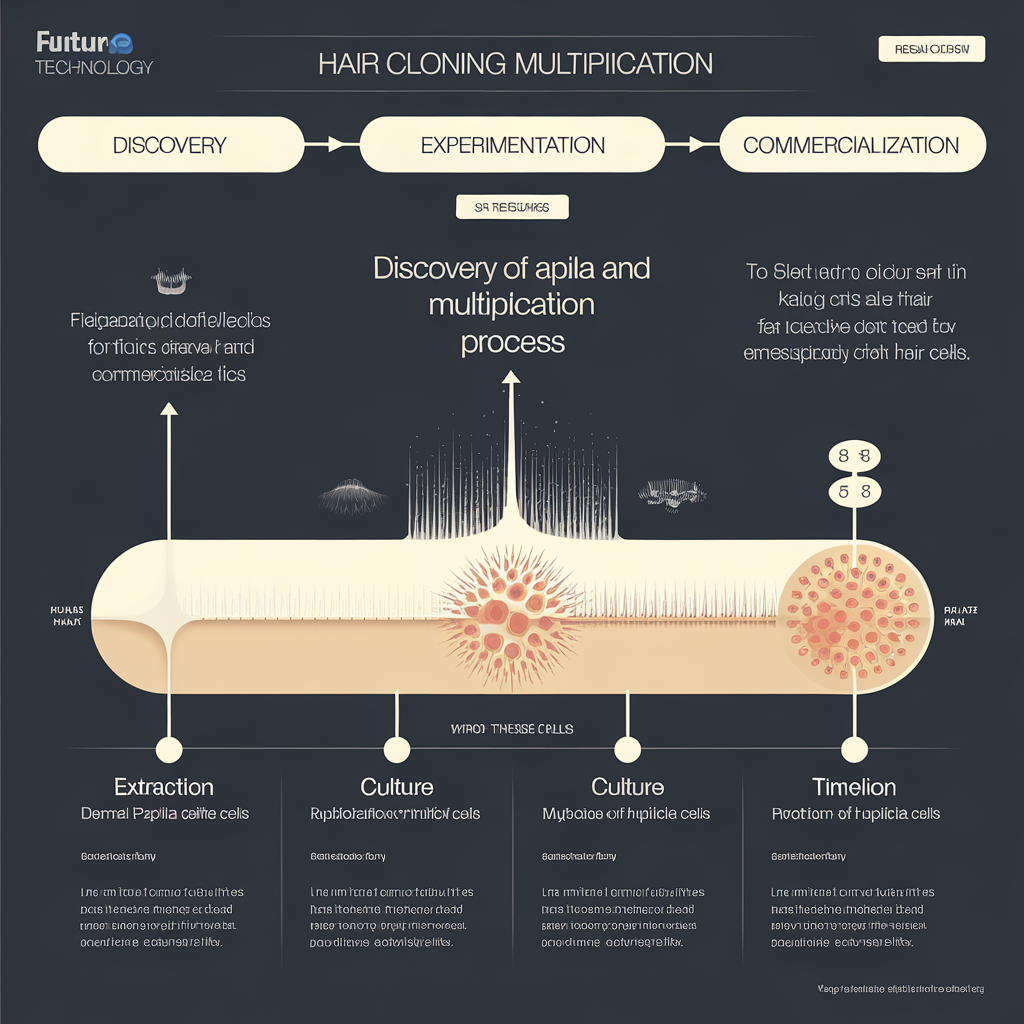
Extract dermal papilla cells, culture and multiply them, then implant to create new hair follicles
📖 In-Depth Overview
The concept of hair cloning emerged from the understanding that dermal papilla (DP) cells — specialized mesenchymal cells at the base of each hair follicle — possess the unique ability to instruct surrounding epithelial cells to form a hair follicle. If DP cells could be extracted, multiplied in culture, and reimplanted, theoretically each cultured cell cluster could seed a new follicle.
The earliest significant work came from Dr. Colin Jahoda at Durham University (UK), who demonstrated in the 1980s and 1990s that dermal papilla cells could induce hair growth when transplanted. In a famous 1999 experiment, Jahoda transplanted his own DP cells into a colleague's arm, successfully inducing new hair growth — proving the concept in principle.
However, the critical obstacle was identified early: dermal papilla cells rapidly lose their hair-inductive (trichogenic) properties when cultured in standard 2D laboratory conditions. After just a few passages (cycles of cell division), the cells stop expressing the genes necessary to instruct follicle formation. This 'loss of inductivity' has been the primary bottleneck in hair cloning research for over 20 years.
Researchers have explored numerous approaches to overcome this challenge. 3D culture systems (spheroids and aggregates), bioengineered scaffolds, co-culture with epithelial cells, and genetic manipulation have all shown partial success in maintaining DP cell properties. In 2013, a team at Columbia University led by Dr. Angela Christiano demonstrated that DP cells cultured in 3D spheroid conditions could regenerate human hair when implanted into mouse skin — a significant breakthrough, though the efficiency of hair generation was still low.
Companies like RepliCel (Canada), Stemson Therapeutics (US/acquired by Allergan/AbbVie), and RIKEN (Japan) have been pursuing various approaches. RepliCel's RCH-01 uses autologous dermal sheath cup cells and was in Phase II trials. Stemson Therapeutics has explored using iPSC (induced pluripotent stem cell)-derived cells to generate follicles. RIKEN's approach combines DP cells with epithelial stem cells in a bioengineered matrix.
While progress continues, the remaining challenges are substantial: achieving consistent follicle induction, controlling hair direction and angle of growth, ensuring long-term follicle viability, and scaling the process to produce thousands of follicles per patient. Realistic timelines suggest at least 10-15 more years of development before potential commercial availability.
🔬 Clinical Studies
Higgins et al. - 3D Spheroid DP Cell Culture (Columbia University)
2013Dermal papilla cells cultured as 3D spheroids maintained their hair-inductive gene signature and induced new hair growth when implanted into human skin grafted on mice. This was the first demonstration of human hair neogenesis from cultured cells.
RepliCel - RCH-01 Phase I Clinical Trial
2018Injection of autologous dermal sheath cup (DSC) cells showed a trend toward increased hair density in some patients at 6 months, though results were variable. The treatment was safe and well-tolerated. Phase II results expected.
Lee et al. - iPSC-Derived Hair Follicle Cells
2020Induced pluripotent stem cells were successfully differentiated into hair follicle-like structures in vitro, demonstrating key hair follicle markers. While promising for future applications, no in vivo hair generation was achieved.
✓ Who Is It For
Hair cloning is not currently available for any patient. In the future, it could benefit anyone with hair loss — particularly those with extensive baldness who have insufficient donor hair for traditional transplant surgery, those seeking a permanent solution that doesn't require ongoing medication, and those with scarring alopecia or trauma-related hair loss. If perfected, hair cloning could provide unlimited hair follicles, making it the ultimate hair loss solution.
✗ Who Should Avoid
Everyone should currently 'avoid' hair cloning in the sense that it is not available as a clinical treatment. Any clinic advertising 'hair cloning' services today is, at best, offering a different type of stem cell or regenerative treatment — not true follicle multiplication. Patients should be extremely skeptical of any provider claiming to offer hair cloning technology, as it does not yet exist in a clinically viable form.
⚖ How It Compares
Hair cloning, if perfected, would surpass all existing treatments by providing unlimited, permanent, natural hair follicles. Current hair transplants are limited by donor supply; medications require continuous use; PRP and LLLT produce modest results. Hair cloning would be a true cure rather than a treatment. However, until it becomes available (likely 10-15+ years), patients should focus on proven, currently available treatments. The best current strategy is to preserve existing hair with medications (finasteride/dutasteride + minoxidil) while waiting for future breakthrough technologies.
💡 Expert Tips from Dermatologists
Don't wait for hair cloning to become available — preserve your existing hair now with proven treatments. Hair preservation is much easier than hair restoration.
Be extremely skeptical of any clinic claiming to offer 'hair cloning' — the technology doesn't exist clinically yet.
Follow research developments from reputable sources (academic journals, ISHRS updates) rather than commercial marketing.
Consider conventional hair transplant surgery if you're a good candidate — it's the closest currently available technology to permanent hair restoration.
The best time to start hair loss prevention is today. Every hair saved now is one that won't need to be cloned or transplanted in the future.
Support organizations funding hair loss research — organizations like the NAAF and Hair Loss Research foundations are accelerating the timeline for breakthrough treatments.