Low-Level Laser Therapy (LLLT)
Low-Level Laser Therapy (LLLT), also known as photobiomodulation or red light therapy, is a non-invasive treatment that uses specific wavelengths of red and near-infrared light to stimulate cellular activity in hair follicles. FDA-cleared devices are available for home use, making LLLT one of the most convenient and side-effect-free options for treating pattern hair loss.
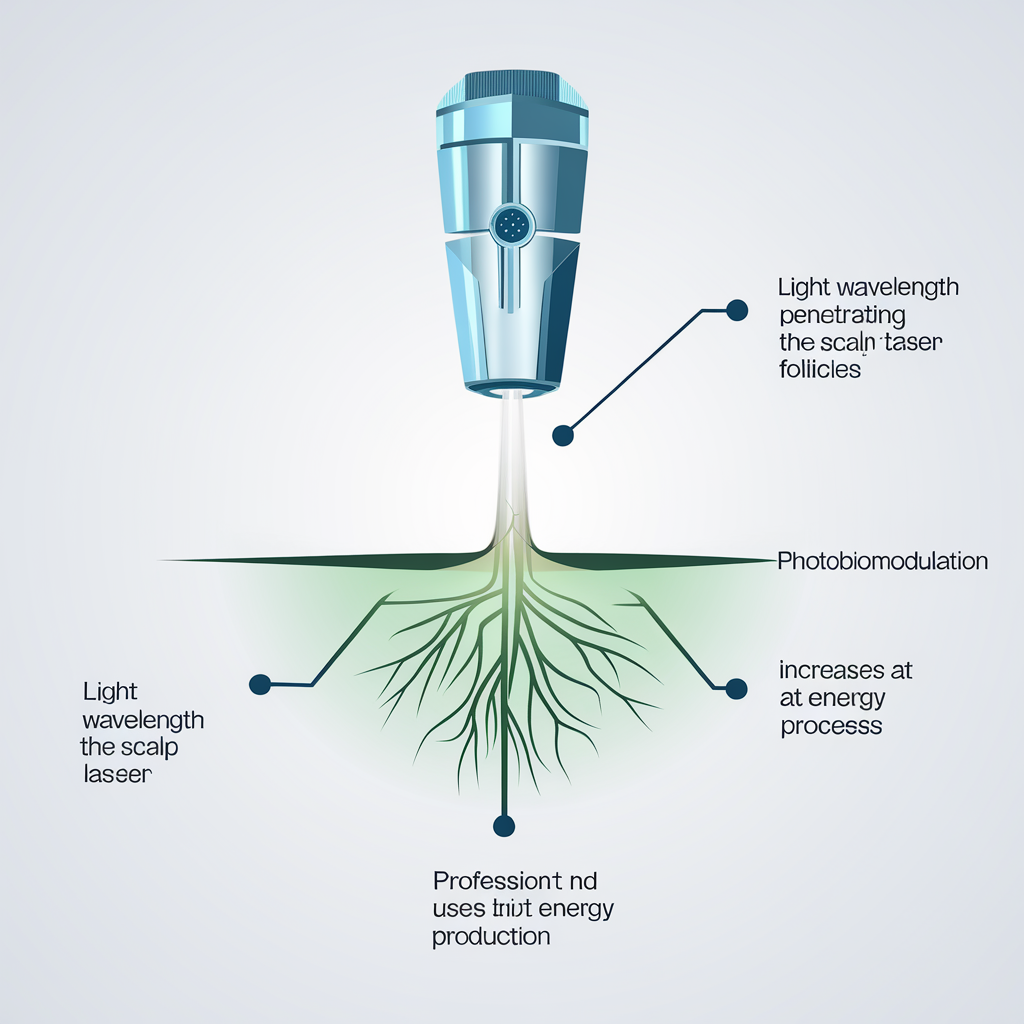
LLLT works at the cellular level by stimulating mitochondria — the energy-producing organelles within cells — to increase ATP (adenosine triphosphate) production. This enhanced cellular energy is theorized to extend the anagen growth phase, increase hair follicle metabolism, and promote proliferation of hair matrix cells.
While the results of LLLT are generally more modest compared to pharmaceutical treatments like finasteride or minoxidil, its excellent safety profile and ease of use make it a valuable addition to combination therapy protocols. Multiple devices have received FDA clearance for the treatment of androgenetic alopecia in both men and women.

Dr. Igor I. Bussel, MD
Board-Certified Ophthalmologist, Medical Reviewer
Dr. Igor I. Bussel is a board-certified ophthalmologist and fellowship-trained surgeon affiliated with the University of California, Irvine (UCI), the Gavin Herbert Eye Institute, and the UCI School of Medicine.
Last Updated: February 2026
⚙ Mechanism of Action
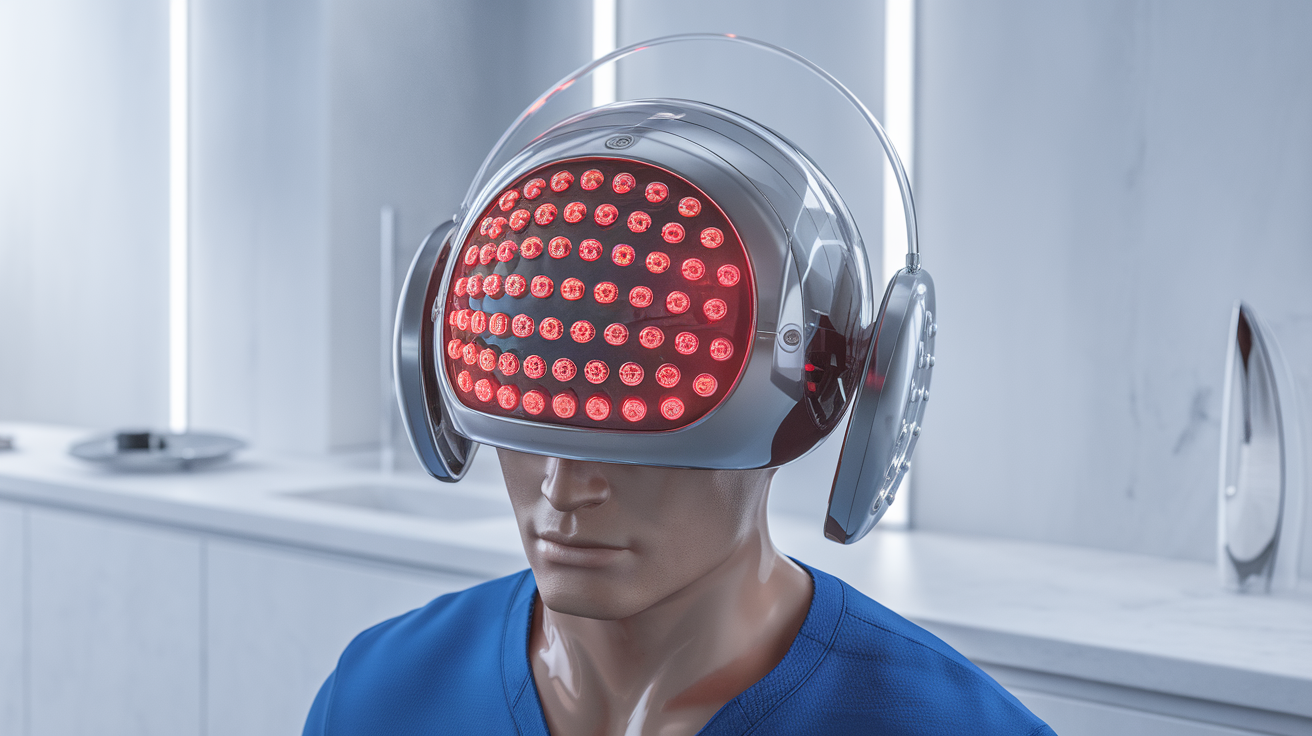
LLLT stimulates mitochondrial function, increases ATP production, and promotes cellular activity in hair follicles. Light wavelengths (600-1000nm) penetrate scalp to reach follicles.
📖 In-Depth Overview
The use of light for therapeutic purposes dates back thousands of years, but modern LLLT began with the invention of the laser in 1960. In 1967, Hungarian scientist Endre Mester discovered that low-powered laser light could stimulate hair growth in mice — an accidental finding that laid the groundwork for photobiomodulation therapy. His experiments showed that shaved mice exposed to ruby laser light grew hair back faster than controls.
LLLT devices for hair loss typically use light in the wavelength range of 630-670 nanometers (visible red light), with some devices incorporating near-infrared wavelengths up to 1000nm. At these wavelengths and low power levels, the light penetrates the scalp to reach the dermal papilla and hair follicle bulge region without generating significant heat.
The primary mechanism involves absorption of photons by cytochrome c oxidase, a chromophore in the mitochondrial electron transport chain. This absorption increases electron transport, boosts ATP production, modulates reactive oxygen species, and activates transcription factors that promote cell proliferation and survival. The net result is increased cellular metabolism in hair follicles, potentially shifting follicles from the telogen (resting) phase back into anagen (growth).
LLLT devices come in several form factors: laser combs, laser helmets/caps, and laser bands. Helmets and caps offer hands-free convenience and more uniform coverage, while combs require manual movement across the scalp. Most devices use a combination of laser diodes and LEDs. Treatment sessions typically range from 15-30 minutes, performed 3-7 times per week depending on the device. LLLT is best suited as an adjunctive therapy alongside proven medications.
📊 Effectiveness Data
🔬 Clinical Studies
Lanzafame et al. - LLLT Helmet 655nm RCT
2013After 16 weeks, the LLLT group showed a 39% increase in hair growth compared to a sham device control group. The treatment was well-tolerated with no adverse events reported.
Jimenez et al. - HairMax LaserComb 26-Week RCT
2014Subjects treated with the laser comb showed significantly greater increase in terminal hair density compared to sham device at 26 weeks. Results were significant in both men and women across all four clinical trials.
Faghihi et al. - LLLT for Female Pattern Hair Loss
2018Women treated with LLLT showed significant improvement in hair density and hair diameter compared to placebo group after 24 weeks of treatment. Global photography assessment showed improvement in 68% of treated subjects.
✓ Who Is It For
LLLT is ideal for men and women with mild to moderate pattern hair loss who want a completely non-invasive, drug-free treatment option. It's perfect for those who cannot tolerate oral medications, are concerned about side effects of finasteride or minoxidil, or want to supplement their existing treatment regimen. It's also suitable for patients with diffuse thinning and those looking for a convenient at-home treatment they can use while working or relaxing.
✗ Who Should Avoid
People with photosensitivity disorders or those taking photosensitizing medications should avoid LLLT. Patients with skin cancer or suspicious scalp lesions should be evaluated before starting treatment. Those expecting dramatic results similar to finasteride or hair transplant may be disappointed — LLLT produces modest improvements and works best as part of a comprehensive approach. Patients with advanced baldness (Norwood VI-VII) are unlikely to see meaningful results.
💰 Cost Breakdown
✓ Advantages
- • Non-invasive
- • No systemic side effects
- • Can be used at home
- • Safe for long-term use
- • Can be combined with other treatments
✗ Disadvantages
- • Requires consistent, long-term use
- • Results modest compared to medications
- • Initial device cost $400-$1,000
- • Time commitment (15-30 minutes per session)
⚖ How It Compares
LLLT produces more modest results compared to finasteride or minoxidil but has virtually no side effects. It's more expensive upfront ($400-$1,000 for a device) but cheaper long-term than PRP or hair systems. Unlike medications, LLLT has no drug interactions and is safe for both sexes. Compared to microneedling, LLLT is completely painless but generally less effective. Its greatest value is as an adjunctive treatment that can enhance the results of proven medical therapies without adding side effect risk.
💡 Expert Tips from Dermatologists
Consistency matters more than session length — using the device regularly 3+ times per week for 6+ months is essential for seeing results.
Choose a helmet or cap over a comb for more uniform light coverage and hands-free convenience.
Look for devices with actual laser diodes, not just LEDs — while both may help, laser diodes deliver more focused, coherent light at therapeutic wavelengths.
Use LLLT on clean, dry hair without products — oils and styling products can block light penetration.
Don't expect LLLT alone to reverse significant hair loss — it works best when combined with minoxidil and/or finasteride.
Consider LLLT as a 'maintenance multiplier' that enhances other treatments rather than a standalone cure.
🔗 Combination Protocols
Often combined with minoxidil or finasteride for enhanced effect