Microneedling (Dermaroller)
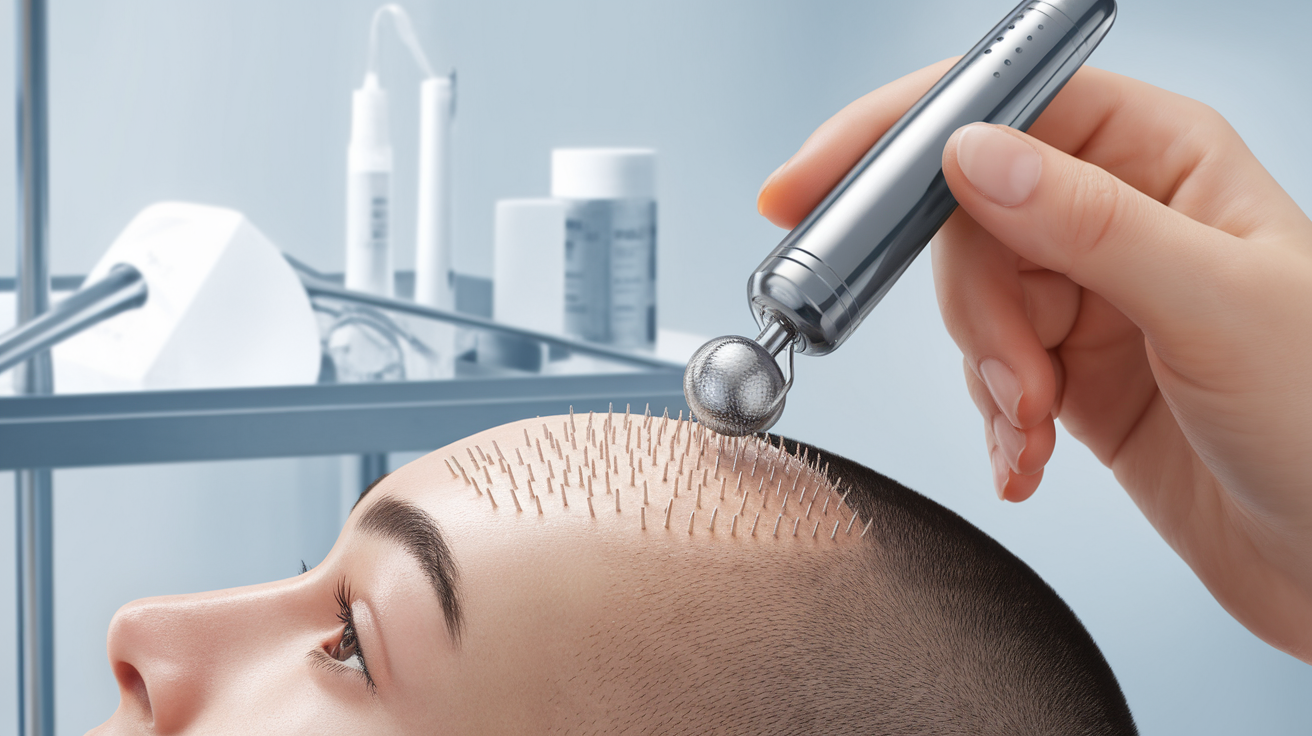
Microneedling, also known as collagen induction therapy, involves using a device with fine needles to create controlled micro-injuries in the scalp. These micro-injuries trigger the body's natural wound healing response, stimulating the release of growth factors, increasing blood flow, and enhancing collagen production — all of which can promote hair follicle regeneration and improved hair growth.
Originally used in dermatology for skin rejuvenation and scar treatment, microneedling was adapted for hair loss treatment after studies demonstrated its ability to upregulate growth factor expression in the scalp. The technique has gained particular attention for its synergistic effect with topical treatments like minoxidil, with studies showing up to 44% greater improvement when the two are combined.
Microneedling can be performed at home using derma rollers or professionally using motorized derma pens. The key variable is needle depth — 1.0-1.5mm is most commonly studied for hair loss, deep enough to reach the dermal papilla and stimulate wound healing without causing excessive damage. The treatment is relatively affordable, minimally invasive, and carries few systemic side effects.

Dr. Igor I. Bussel, MD
Board-Certified Ophthalmologist, Medical Reviewer
Dr. Igor I. Bussel is a board-certified ophthalmologist and fellowship-trained surgeon affiliated with the University of California, Irvine (UCI), the Gavin Herbert Eye Institute, and the UCI School of Medicine.
Last Updated: February 2026
⚙ Mechanism of Action
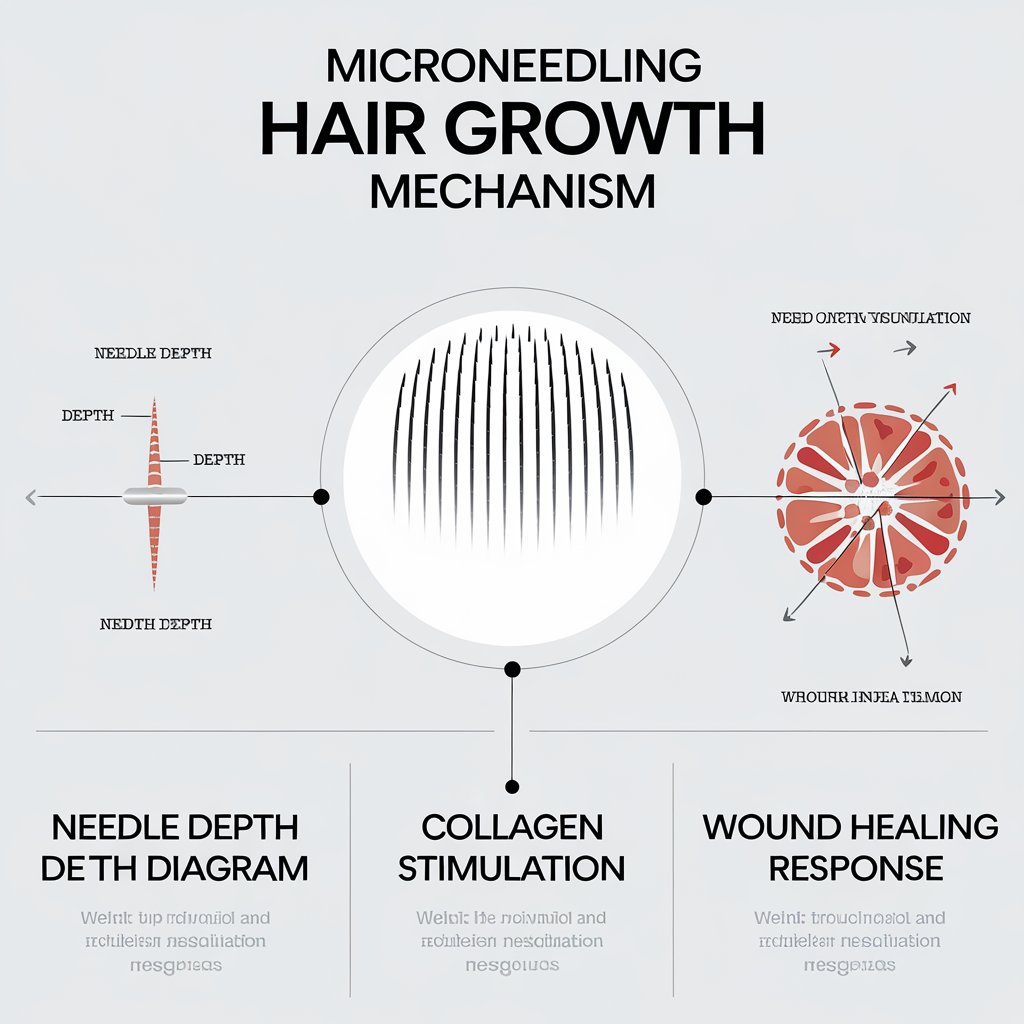
Microneedling creates controlled micro-injuries that trigger wound healing response, increase growth factor production, and improve scalp blood flow. Also enhances penetration of topical medications like minoxidil.
📖 In-Depth Overview
The concept of using controlled skin injury to stimulate healing and regeneration dates back to the 1990s, when Dr. Desmond Fernandes pioneered percutaneous collagen induction (PCI) for facial rejuvenation. The application to hair loss came later, with the pivotal 2013 study by Dhurat et al. demonstrating that microneedling combined with minoxidil produced significantly better results than minoxidil alone.
The mechanism is multifaceted. The micro-injuries created by needles trigger a three-phase wound healing cascade: inflammation, proliferation, and remodeling. During this process, platelets release growth factors (PDGF, EGF), fibroblasts produce collagen and elastin, and stem cells in the follicular bulge region are activated. This creates a micro-environment conducive to hair follicle neogenesis and improved follicle function.
Additionally, microneedling creates transient micro-channels in the skin that dramatically improve the absorption of topically applied medications. Studies show that minoxidil penetration can increase by up to 5-fold when applied after microneedling, which partly explains the enhanced results seen in combination therapy.
Microneedling is best performed weekly with 1.0-1.5mm needles. Derma rollers are more affordable but cover less area per pass, while motorized derma pens offer adjustable depth and more consistent needle penetration. Professional treatments using medical-grade devices can use needles up to 2.5mm, though this increases discomfort and recovery time. Most patients see initial results after 8-12 weeks, with continued improvement over 6 months.
📊 Effectiveness Data
🔬 Clinical Studies
Dhurat et al. - Microneedling + Minoxidil vs Minoxidil Alone
201382% of patients in the microneedling + minoxidil group rated their improvement as +2 or +3 on a 7-point scale, versus 4.5% in the minoxidil-only group. Mean hair count increase was 91.4 hairs in the combination group vs. 22.2 in the minoxidil group.
Kumar et al. - Microneedling Efficacy RCT
2018Combination of microneedling and 5% minoxidil showed superior results to minoxidil monotherapy in androgenetic alopecia. Hair count and patient satisfaction were significantly higher in the combination group at 12 weeks.
Faghihi et al. - Microneedling + PRP for AGA
2021Microneedling combined with PRP injections showed significant improvement in hair density (37% increase) and hair thickness compared to PRP alone. The combination was well-tolerated with minimal adverse events.
✓ Who Is It For
Microneedling is ideal for patients already using minoxidil who want to enhance their results, those with mild to moderate androgenetic alopecia, and anyone looking for an affordable at-home treatment option. It's particularly well-suited for patients who want to avoid oral medications but desire more than what minoxidil alone can provide. Both men and women can benefit, and it can be safely combined with virtually any other hair loss treatment.
✗ Who Should Avoid
Patients with active scalp infections, open wounds, or inflammatory scalp conditions (severe psoriasis, eczema) should avoid microneedling until these are resolved. Those on blood thinners should consult their doctor, as microneedling causes micro-bleeding. People with a history of keloid scarring should proceed with caution. Immunocompromised patients face higher infection risk. Those with very thin scalp skin or conditions affecting wound healing should consult a dermatologist before starting.
💰 Cost Breakdown
✓ Advantages
- • Enhances topical medication penetration
- • Stimulates natural healing response
- • Can be done at home with derma roller
- • Relatively low cost
- • Minimal downtime
✗ Disadvantages
- • Requires consistent weekly use
- • Results take 3-6 months
- • Risk of infection with improper technique
- • Discomfort during procedure
- • Professional treatments expensive
⚠ Side Effects
⚖ How It Compares
Microneedling is unique among hair loss treatments in that it's primarily used as an enhancer for other therapies rather than a standalone treatment. Its greatest value is amplifying minoxidil's effectiveness — no other adjunctive treatment has shown a comparable boost. Compared to PRP, microneedling is far more affordable (especially at home) and can be done weekly rather than monthly. Compared to LLLT, microneedling may produce stronger results but involves discomfort and brief recovery. The combination of microneedling + minoxidil + finasteride represents one of the most cost-effective comprehensive treatment protocols available.
💡 Expert Tips from Dermatologists
Wait 24 hours after microneedling before applying minoxidil to avoid irritation from enhanced penetration on freshly treated skin.
Clean your derma roller with 70% isopropyl alcohol before and after each use to prevent infection.
Replace your derma roller every 10-15 uses — dull needles cause more trauma and less effective micro-channels.
Start with 0.5mm needle depth and gradually work up to 1.0-1.5mm as your scalp develops tolerance.
Roll in multiple directions (horizontal, vertical, diagonal) to create a uniform pattern of micro-injuries.
Avoid microneedling the same area more than once per week — the scalp needs time to complete the wound healing cycle for maximum benefit.
🔗 Combination Protocols
Most effective when combined with minoxidil 5%; can also be combined with finasteride or dutasteride