PRP (Platelet-Rich Plasma)
Platelet-Rich Plasma (PRP) therapy is a regenerative medicine approach that uses a concentrated preparation of the patient's own blood platelets to stimulate hair follicle activity and promote new hair growth. The treatment harnesses the body's natural healing mechanisms by delivering a concentrated dose of growth factors directly to the scalp.
PRP has gained significant popularity in hair restoration over the past decade, with a growing body of clinical evidence supporting its effectiveness for both androgenetic alopecia and other forms of hair loss. As an autologous treatment (using the patient's own blood), PRP carries minimal risk of allergic reaction or disease transmission.
While not FDA-approved specifically for hair loss, PRP is widely performed by dermatologists and hair restoration surgeons worldwide. It is particularly valued as a complement to other treatments, including hair transplant surgery, where it may improve graft survival and post-operative growth. The treatment requires an initial series of sessions followed by periodic maintenance treatments to sustain results.

Dr. Igor I. Bussel, MD
Board-Certified Ophthalmologist, Medical Reviewer
Dr. Igor I. Bussel is a board-certified ophthalmologist and fellowship-trained surgeon affiliated with the University of California, Irvine (UCI), the Gavin Herbert Eye Institute, and the UCI School of Medicine.
Last Updated: February 2026
⚙ Mechanism of Action
PRP contains growth factors (PDGF, VEGF, FGF, IGF-1, TGF-β) that are theorized to stimulate dormant hair follicles, prolong anagen phase, and increase blood flow to follicles
📖 In-Depth Overview
PRP therapy evolved from orthopedic and dental medicine, where it was used to accelerate wound healing and tissue regeneration. Its application to hair loss began in the early 2010s, when researchers hypothesized that the growth factors concentrated in platelets could stimulate dormant hair follicles and promote angiogenesis (new blood vessel formation) around follicular units.
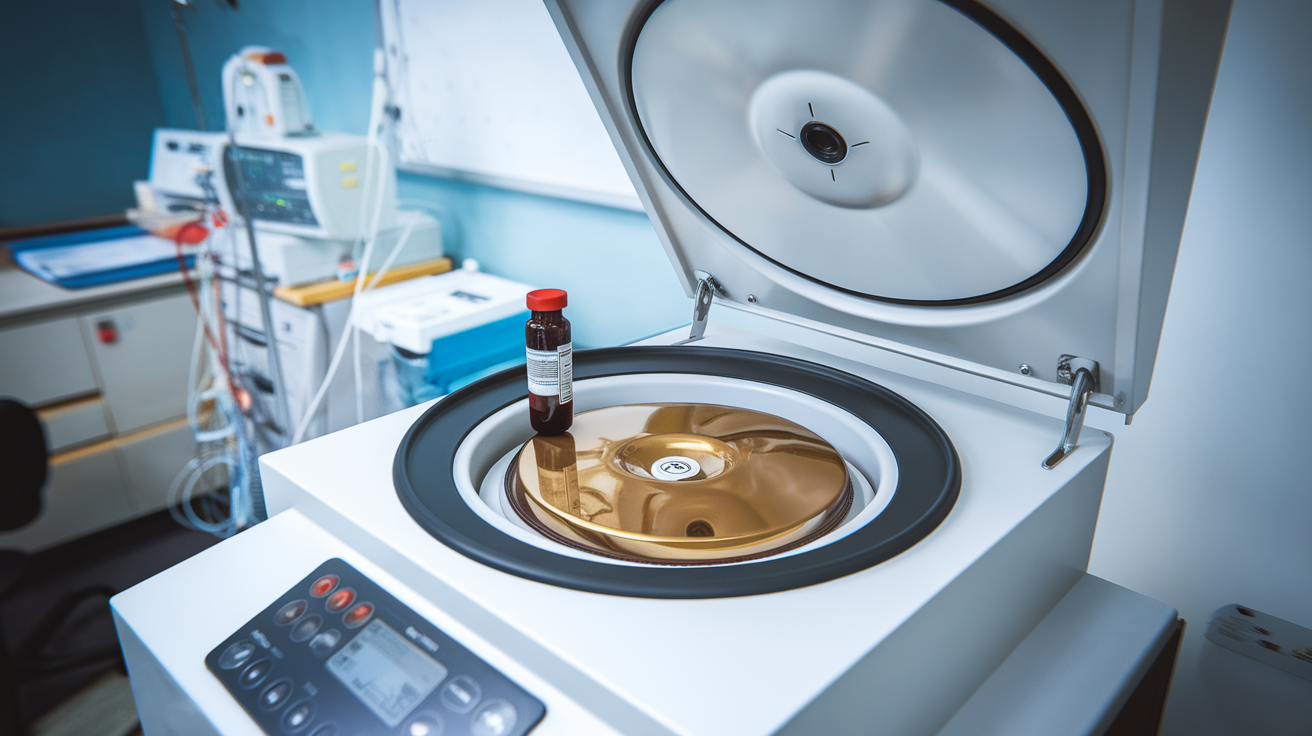
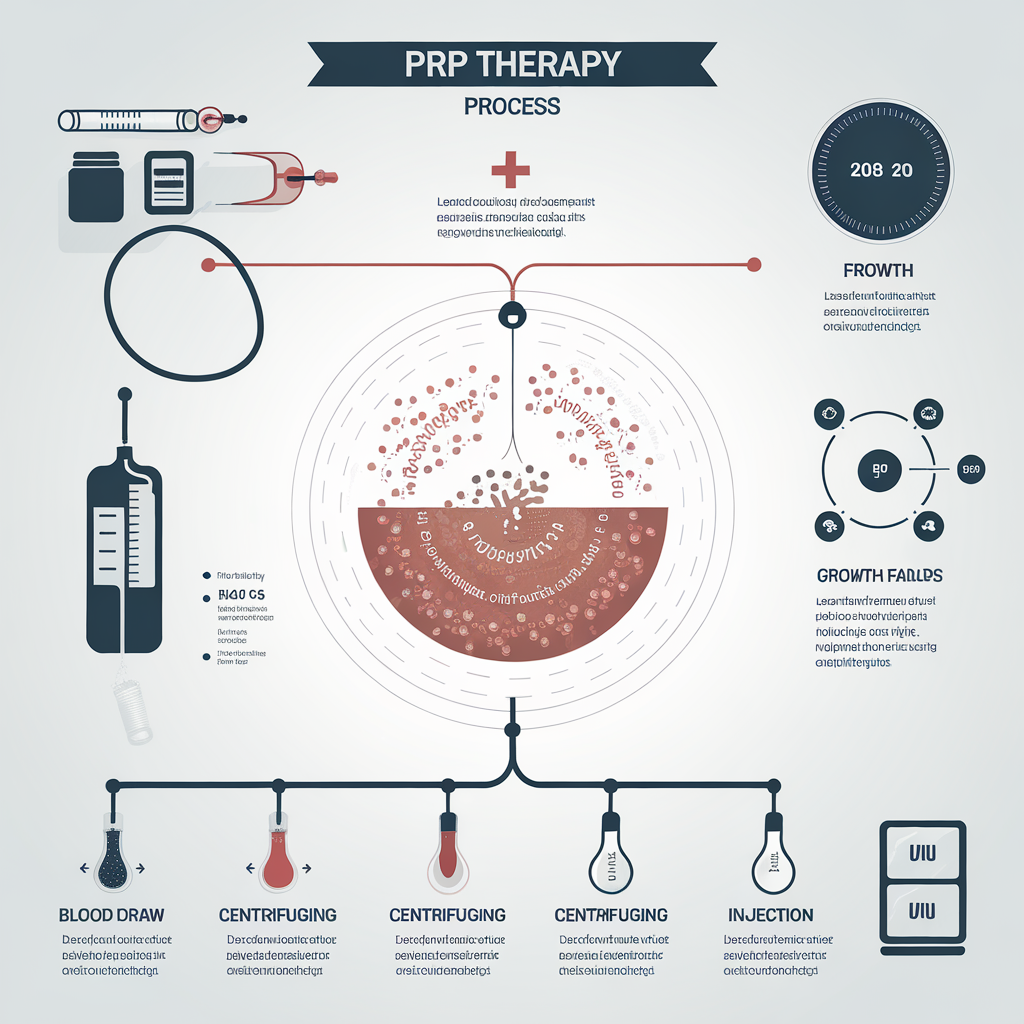
The procedure involves drawing a small amount of blood (typically 10-60mL), processing it in a centrifuge to separate the platelet-rich plasma from red blood cells and platelet-poor plasma, and then injecting the concentrated PRP into the scalp at multiple sites across areas of thinning. The entire process takes 30-60 minutes and is performed in-office.
The therapeutic effect of PRP is attributed to the release of growth factors from alpha granules within platelets, including platelet-derived growth factor (PDGF), vascular endothelial growth factor (VEGF), transforming growth factor-beta (TGF-β), insulin-like growth factor (IGF-1), and fibroblast growth factor (FGF). These growth factors stimulate dermal papilla cells, promote follicular stem cell activity, and enhance blood supply to hair follicles.
PRP is best for patients with early to moderate androgenetic alopecia who still have functioning hair follicles. It is not effective for completely bald areas where follicles have been permanently destroyed. Many practitioners combine PRP with microneedling to enhance delivery and stimulate additional wound healing responses.
📊 Effectiveness Data
🔬 Clinical Studies
Gentile et al. - Half-Head Study of PRP for AGA
2015PRP-treated areas showed significant increases in hair count, hair density, and terminal hair density compared to placebo-treated areas of the same scalp. Mean increase of 33.6 hairs per cm² in treated areas.
Alves & Grimalt - Systematic Review of PRP for AGA
2018Meta-analysis of controlled trials showed PRP significantly improved hair density and thickness compared to placebo. PRP was effective in both male and female pattern hair loss with minimal adverse events.
Evans et al. - Platelet-Rich Plasma RCT
2020After 6 months of PRP treatment (3 sessions at 4-week intervals), patients showed significant improvement in hair density (+27.7 hairs/cm²) and hair diameter compared to baseline. Results maintained at 12-month follow-up.
✓ Who Is It For
PRP is ideal for men and women with early to moderate hair thinning who still have active hair follicles. It's particularly suited for patients who prefer a natural, drug-free approach, those who cannot tolerate oral medications like finasteride, or as a complement to existing medical therapy. It's also excellent for post-hair transplant patients to improve graft survival. Women with female pattern hair loss are strong candidates, as PRP avoids the hormonal concerns of finasteride.
✗ Who Should Avoid
Patients with platelet disorders, blood clotting conditions, or those on anticoagulant therapy should avoid PRP. Active scalp infections, uncontrolled diabetes, liver disease, and autoimmune conditions that could affect platelet function are contraindications. Those with completely bald areas (Norwood VI-VII) are unlikely to benefit, as PRP cannot regenerate destroyed follicles. Cancer patients or those with chronic skin diseases should also avoid PRP without oncologist approval.
💰 Cost Breakdown
⚖ How It Compares
PRP sits between medical therapy (finasteride/minoxidil) and surgical intervention (hair transplant) in terms of both cost and invasiveness. It is more expensive than topical or oral medications but less invasive and less costly than transplant surgery. Unlike finasteride, PRP has no systemic hormonal side effects. Compared to LLLT, PRP has stronger evidence for efficacy but requires in-office visits. PRP is often most effective when combined with medical therapy rather than used as a standalone treatment.
💡 Expert Tips from Dermatologists
Avoid NSAIDs (ibuprofen, aspirin) for at least 1 week before PRP, as they impair platelet function and reduce treatment effectiveness.
Hydrate well the day before and day of treatment — good hydration improves blood draw quality and platelet concentration.
Ask your provider about their preparation protocol — the number of spins, platelet concentration factor, and whether they use activators all affect results.
Plan for at least 3-4 initial sessions before judging results — a single PRP session rarely produces visible improvement.
Consider combining PRP with microneedling in the same session for enhanced growth factor penetration.
Not all PRP is equal — 'double-spin' protocols that achieve 4-7x platelet concentration tend to produce better results than single-spin methods.