Scalp Micropigmentation (SMP)
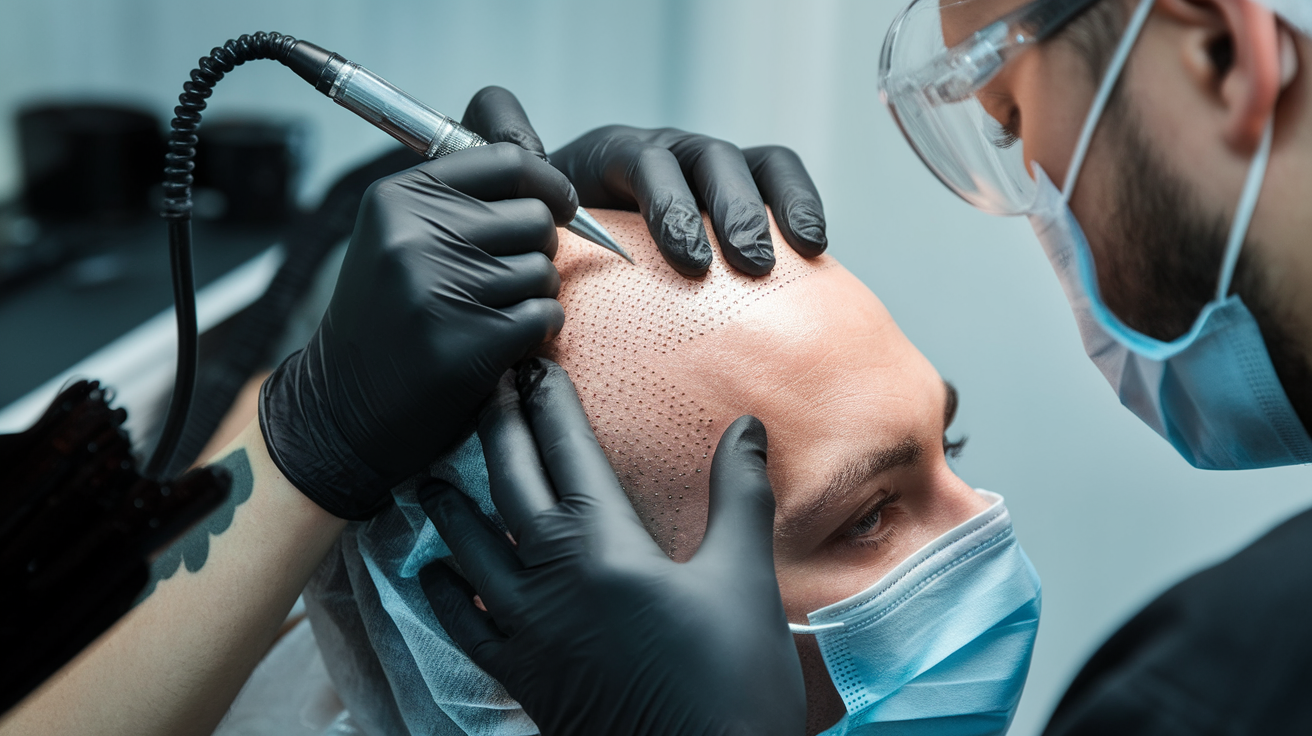
Scalp Micropigmentation (SMP) is a specialized cosmetic tattooing procedure that creates the appearance of tiny hair follicles on the scalp, simulating a closely-shaved head or adding the illusion of density to thinning areas. Unlike medical treatments that aim to regrow or preserve hair, SMP is purely cosmetic — it changes the appearance of the scalp without affecting actual hair growth.
SMP has evolved significantly since its inception in the early 2000s, with modern techniques using specialized pigments, micro-fine needles, and digital machines to create incredibly realistic results. When performed by a skilled practitioner, SMP can be virtually undetectable and provides immediate visual improvement — a significant advantage over treatments that require months to show results.
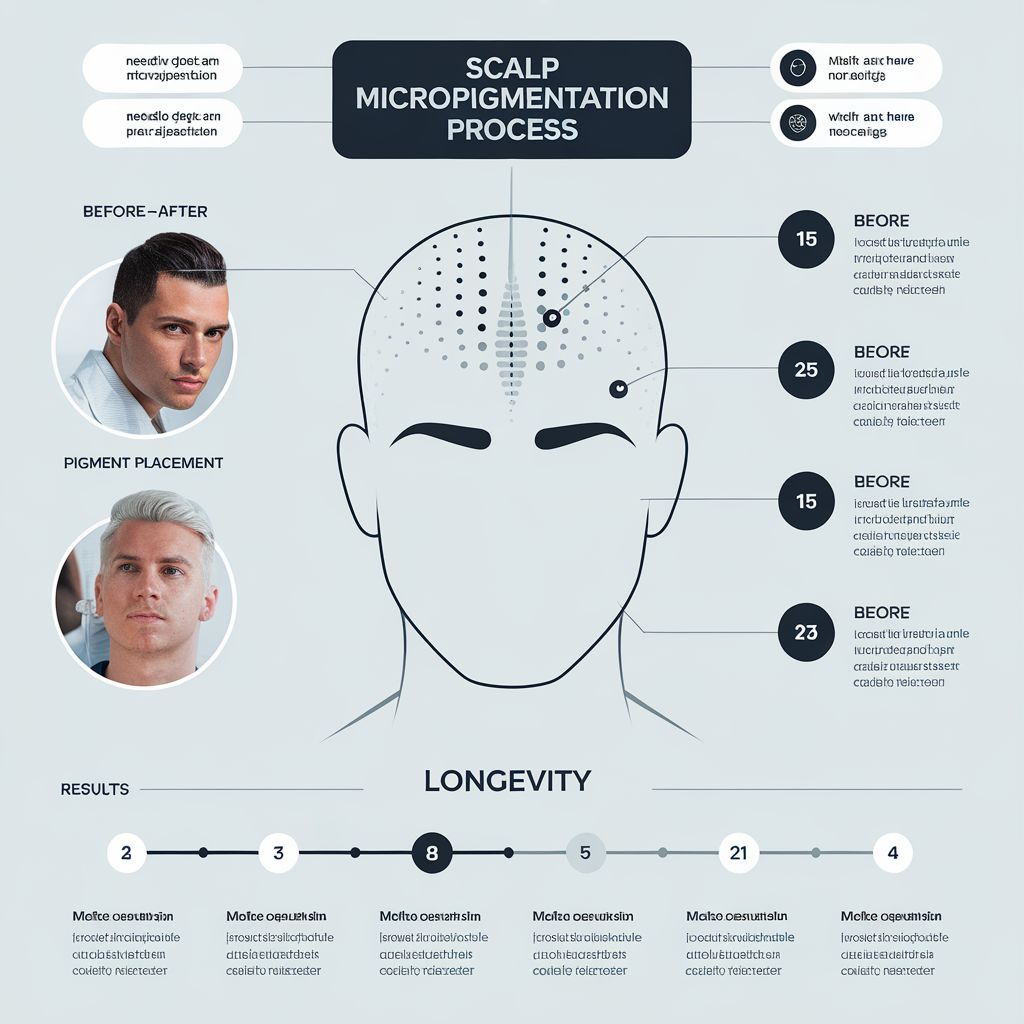
The procedure typically requires 3-4 sessions, each lasting 2-4 hours, spaced 1-2 weeks apart. Results last 3-7 years before touch-ups are needed, as the pigment gradually fades due to UV exposure and the immune system's natural breakdown of foreign particles. SMP is suitable for all skin types and hair colors, though lighter pigments on lighter skin require more skill to execute convincingly.

Dr. Igor I. Bussel, MD
Board-Certified Ophthalmologist, Medical Reviewer
Dr. Igor I. Bussel is a board-certified ophthalmologist and fellowship-trained surgeon affiliated with the University of California, Irvine (UCI), the Gavin Herbert Eye Institute, and the UCI School of Medicine.
Last Updated: February 2026
⚙ Mechanism of Action
Specialized pigment injected into superficial dermis to create appearance of short hair stubble; purely cosmetic, not a hair growth treatment
📖 In-Depth Overview
SMP was pioneered in the UK in the early 2000s by Ian Watson and Ranbir Samra, who founded HIS Hair Clinic and developed the first dedicated SMP technique. Prior to this, traditional tattoo methods produced results that were often obviously artificial — too deep, wrong pigments, and incorrect dot sizes that didn't mimic real follicles.
Modern SMP uses specialized equipment distinct from traditional tattooing. The needles are finer (typically 1-3 point configurations vs. 5-14 point tattoo needles), insertion depth is shallower (targeting the upper dermis at 1-2mm vs. 3-5mm for tattoos), and the pigments are specifically formulated for scalp use — they don't contain the heavy metals found in some tattoo inks and are designed to fade to neutral tones rather than turning blue or green over time.
The procedure involves creating thousands of tiny dots that replicate the appearance of hair follicles at various stages of the growth cycle. A skilled practitioner will vary dot size, spacing, density, and placement to create a natural-looking pattern that accounts for natural hairline irregularity, directional hair growth patterns, and appropriate density gradation.
SMP can serve multiple purposes: creating the look of a full buzz cut on a bald head, adding density to thinning areas, camouflaging hair transplant scars (both FUT strip scars and FUE donor area), covering birthmarks or burns, and defining a more youthful hairline. It's particularly popular among men who embrace the shaved-head look but want to eliminate the appearance of a receding hairline or bald patches.
The treatment requires no downtime — patients can return to normal activities immediately, though they should avoid swimming, heavy sweating, and direct sun exposure for 4-5 days after each session. Results are considered semi-permanent; most clients need touch-up sessions every 3-5 years to maintain optimal appearance.
📊 Effectiveness Data
🔬 Clinical Studies
Rassman et al. - Scalp Micropigmentation as Cosmetic Treatment for Hair Loss
2015Patient satisfaction was high, with 97% reporting improved appearance and self-confidence. The procedure was well-tolerated with no significant adverse events. Optimal results required 2-4 sessions.
Donovan et al. - SMP for Cicatricial Alopecia
2017SMP provided effective cosmetic camouflage for patients with scarring alopecia where hair regrowth was not possible. Patient satisfaction rated 8.7/10 at 6-month follow-up with minimal fading.
Park & Kim - SMP Pigment Retention Study
2020After 3 years, 73% of patients maintained satisfactory results without touch-ups. Pigment fading was the primary reason for touch-up requests, occurring more frequently in patients with significant sun exposure.
✓ Who Is It For
SMP is ideal for men and women who want immediate cosmetic improvement without surgery or ongoing medication. It's particularly suited for those who keep their hair very short or shaved, patients with advanced baldness (Norwood V-VII) where other treatments offer limited benefit, people with hair transplant scars they want to conceal, and those with diffuse thinning who want added visual density. It's also excellent for patients who have exhausted medical treatments and aren't candidates for surgical transplant.
✗ Who Should Avoid
People who frequently change hairstyles or prefer longer hair may not be good SMP candidates, as the effect is most convincing with very short hair. Those with active scalp conditions (psoriasis, eczema, dermatitis) should resolve these before SMP. People prone to keloid scarring need careful evaluation. Patients with unrealistic expectations — SMP creates an illusion, not actual hair — should understand the limitations. Those on blood thinners or with bleeding disorders face increased risk during the procedure.
💰 Cost Breakdown
✓ Advantages
- • Immediate results
- • Minimal downtime
- • Realistic appearance with skilled practitioner
- • No systemic side effects
- • One-time investment (vs ongoing medication costs)
✗ Disadvantages
- • Purely cosmetic; no hair growth
- • Requires touch-ups every 2-3 years
- • Fades over time
- • Quality highly dependent on practitioner skill
- • Difficult to reverse if unsatisfied
- • May look unnatural if done poorly
⚖ How It Compares
SMP offers the most immediate results of any hair loss treatment — visible improvement after the first session. Unlike hair transplants, there's no surgical recovery, no donor area scarring, and no risk of shock loss. However, SMP doesn't provide actual hair — only the appearance of follicles. Compared to hair systems, SMP requires far less maintenance (no daily care, no monthly replacements) and is more cost-effective long-term. The initial cost ($2,000-$5,000) is comparable to a hair transplant but provides a different type of result. SMP and hair transplants can be complementary — many patients use SMP to enhance transplant density or camouflage donor scars.
💡 Expert Tips from Dermatologists
Research practitioners extensively — SMP quality varies enormously. Look for dedicated SMP specialists rather than general tattoo artists, and always view healed results (not fresh work) in their portfolio.
Start conservatively with hairline placement — it's easier to add density in subsequent sessions than to remove pigment that was placed too aggressively.
Use SPF 50+ sunscreen on treated areas daily — UV exposure is the primary cause of premature fading and color shifting.
Avoid swimming pools and saunas for at least 5 days after each session to prevent pigment migration.
Ask about the specific pigments used — medical-grade pigments formulated for SMP (not traditional tattoo inks) are essential for natural results that age well.
Plan for touch-ups every 3-5 years as part of the long-term maintenance cost — factor this into your decision.