Hair Loss Supplements
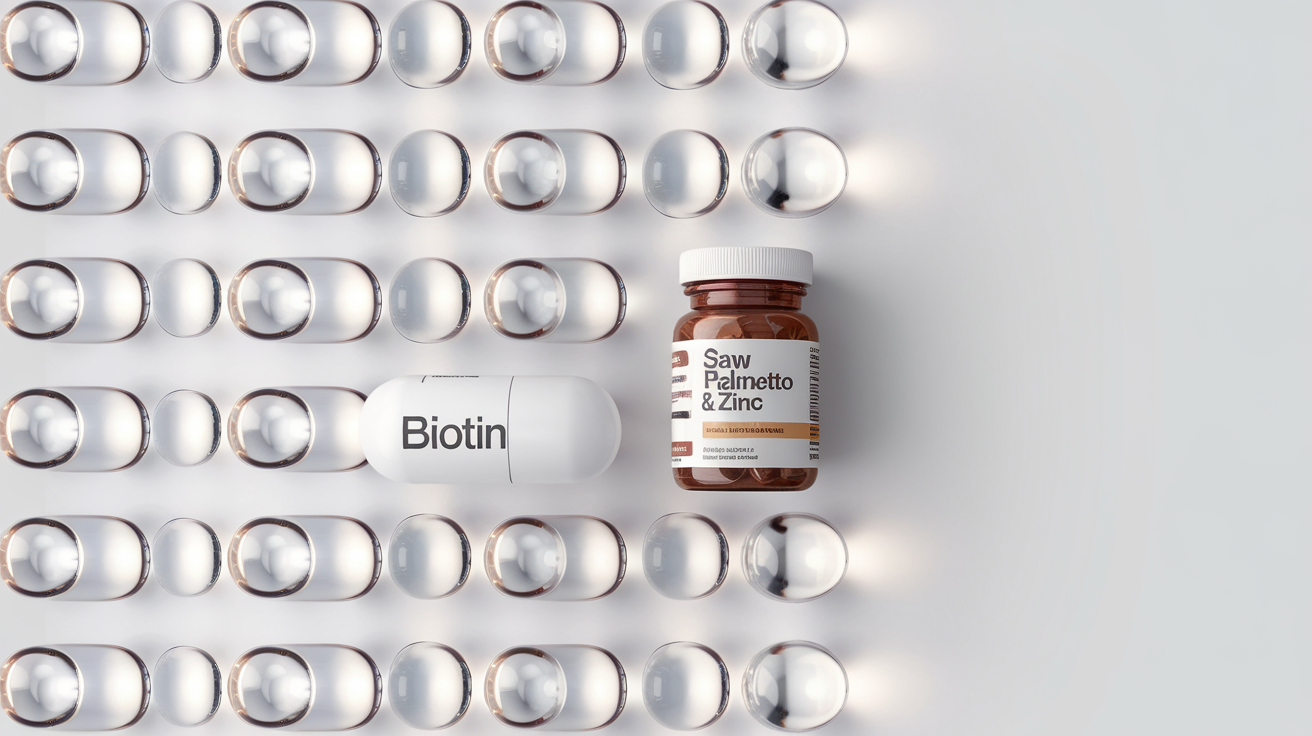
Hair loss supplements encompass a wide range of vitamins, minerals, and botanical extracts marketed for improving hair growth and reducing hair shedding. While some supplements — particularly biotin, saw palmetto, iron, zinc, and vitamin D — have scientific rationale and limited clinical evidence supporting their use, the overall evidence base for most hair supplements is modest compared to FDA-approved treatments.
The supplement industry for hair loss is a multi-billion dollar market, and it's important to distinguish between supplements that address genuine nutritional deficiencies (which can cause or worsen hair loss) and those that are marketed primarily on hype. Blood tests to identify deficiencies in iron, ferritin, zinc, vitamin D, and B vitamins should ideally precede any supplementation regimen.
The most evidence-backed supplements include saw palmetto (a natural DHT inhibitor), biotin (for keratin production), iron and ferritin (particularly for women), zinc, and vitamin D. However, none of these approach the efficacy of prescription treatments like finasteride or minoxidil, and they are best used as part of a comprehensive approach rather than standalone solutions.

Dr. Igor I. Bussel, MD
Board-Certified Ophthalmologist, Medical Reviewer
Dr. Igor I. Bussel is a board-certified ophthalmologist and fellowship-trained surgeon affiliated with the University of California, Irvine (UCI), the Gavin Herbert Eye Institute, and the UCI School of Medicine.
Last Updated: February 2026
📖 In-Depth Overview
The relationship between nutrition and hair health has been recognized for centuries. Hair follicles are among the most metabolically active tissues in the body, with rapid cell division requiring adequate supplies of amino acids, vitamins, and minerals. When nutritional stores are depleted, hair growth is among the first non-essential functions the body sacrifices.
Biotin (vitamin B7) is perhaps the most widely marketed hair supplement, though its effectiveness is primarily limited to individuals with actual biotin deficiency — which is rare in people with normal diets. Biotin serves as a cofactor for carboxylase enzymes involved in fatty acid synthesis, amino acid metabolism, and gluconeogenesis, all of which support keratin production. At typical supplement doses of 2.5-5mg daily, biotin is safe (it's water-soluble), but can interfere with certain laboratory tests including thyroid panels and troponin.
Saw palmetto (Serenoa repens) has the strongest evidence among botanical supplements, acting as a mild natural 5-alpha reductase inhibitor. A 2020 systematic review found that saw palmetto improved hair quality in approximately 60% of patients and increased hair count in about 27%. While less potent than finasteride, it offers a natural alternative for those reluctant to take prescription medications.
Iron deficiency (even without frank anemia) is a recognized contributor to hair loss, particularly in women. Ferritin levels below 30-40 ng/mL have been associated with increased hair shedding. Similarly, vitamin D deficiency is linked to alopecia areata and may contribute to pattern hair loss. Zinc deficiency can cause diffuse hair loss, and supplementation in deficient individuals typically improves shedding within 3-6 months.
The bottom line: supplements work best for correcting deficiencies. If your blood levels of key nutrients are normal, supplementation is unlikely to produce dramatic results. The most rational approach is to test, identify deficiencies, correct them, and combine with proven medical treatments.
🔬 Clinical Studies
Rossi et al. - Saw Palmetto vs Finasteride for AGA
2012Saw palmetto 320mg daily showed improvement in 38% of patients vs. 68% for finasteride 1mg. While less effective than finasteride, saw palmetto demonstrated statistically significant improvement over placebo.
Ablon - Marine Protein Supplement (Viviscal) Clinical Trial
2015Women taking the marine protein supplement showed significant increases in hair count (mean +11.3%) and hair diameter (mean +9.2%) compared to placebo after 6 months of use.
Cho et al. - Pumpkin Seed Oil for Hair Growth
2014Men taking 400mg pumpkin seed oil daily for 24 weeks showed a 40% increase in mean hair count compared to 10% in the placebo group. Self-rated improvement scores were also significantly higher.
✓ Who Is It For
Hair loss supplements are ideal for individuals with documented nutritional deficiencies contributing to hair loss, those seeking natural/non-prescription approaches, and patients who want to optimize their overall hair health alongside proven treatments. Women with hair thinning related to iron, ferritin, or vitamin D deficiency are particularly good candidates. Saw palmetto is suited for men wanting a milder, natural DHT inhibitor — especially those who cannot tolerate finasteride.
✗ Who Should Avoid
Patients should not rely on supplements as their sole treatment for significant pattern hair loss — the evidence does not support this approach. Those taking blood thinners should consult their doctor before taking supplements like vitamin E or fish oil. Saw palmetto should be avoided by women who are pregnant or breastfeeding. Excess iron supplementation without confirmed deficiency can be harmful (hemochromatosis risk). Biotin supplements should be stopped 72 hours before blood tests to avoid lab interference.
⚖ How It Compares
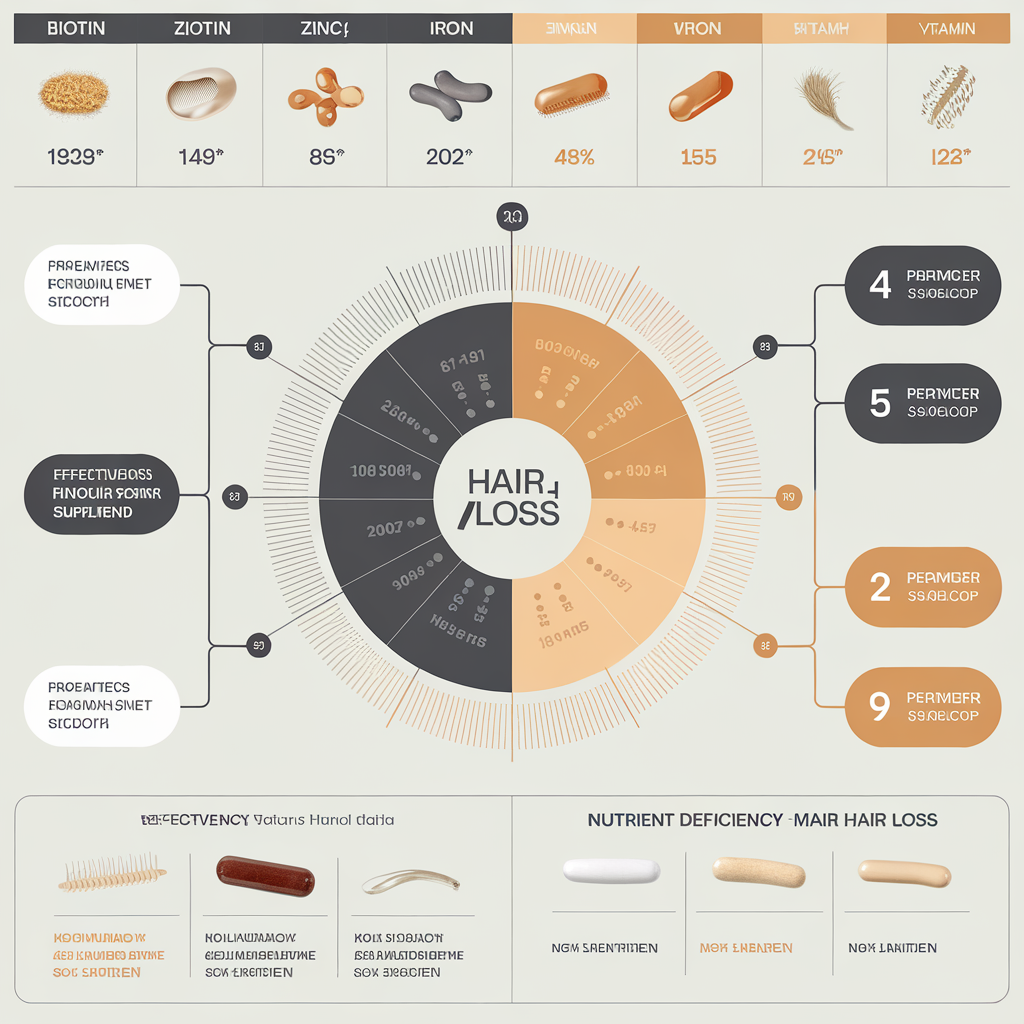
Supplements are the least potent category of hair loss treatments compared to medications, procedures, and devices. Saw palmetto's efficacy is roughly half that of finasteride. Biotin, iron, and vitamin D primarily help those with deficiencies — they won't meaningfully help someone with normal levels. Compared to minoxidil or LLLT, supplements are less effective for stimulating growth but can address underlying nutritional factors that other treatments don't. Their greatest value is as a foundation layer supporting overall hair health while proven treatments do the heavy lifting.
💡 Expert Tips from Dermatologists
Get blood work before spending money on supplements — test ferritin, vitamin D, zinc, thyroid panel, and complete blood count to identify actual deficiencies.
If your ferritin is below 40 ng/mL, iron supplementation may reduce shedding significantly — take with vitamin C for better absorption.
Stop biotin supplements at least 72 hours before any blood tests, as biotin interferes with many immunoassays including thyroid and cardiac markers.
Saw palmetto takes 3-6 months to show effects — don't give up after a few weeks.
Be skeptical of expensive multi-ingredient hair supplements — many contain underdosed ingredients and rely on marketing rather than evidence.
Consider a basic approach: a quality multivitamin, vitamin D3 (2000-4000 IU if deficient), and saw palmetto (320mg standardized extract) covers the main bases without overspending.